Product Descriptions
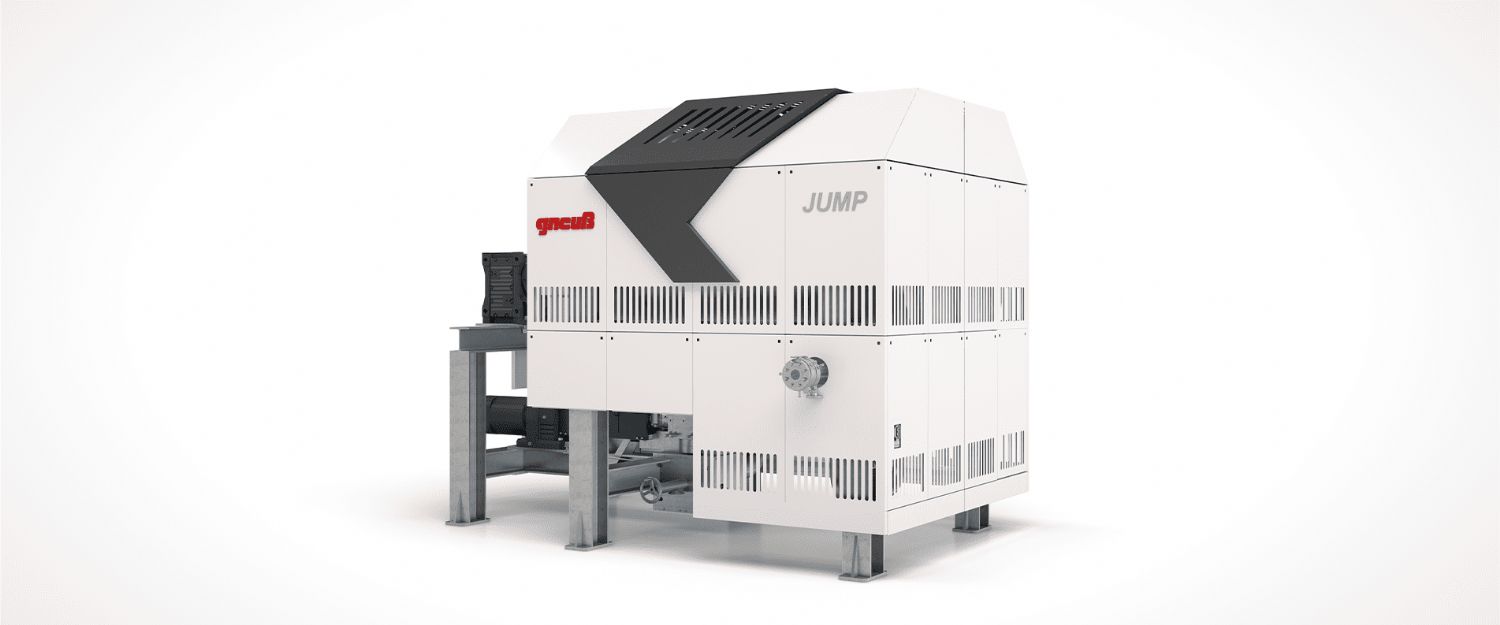
GNEUSS Polyreactor JUMP Technology
GNEUSS Polyreactor JUMP is an advanced polycondensation reactor system used particularly in the recycling of polyester-based polymers. This technology increases the viscosity of recycled PET (Polyethylene Terephthalate) materials, enabling the production of high-performance end products. The Polyreactor JUMP system restructures the molecular structure of the polymer melt, making it possible for recycled raw materials to be reused in high-quality applications.
This reactor technology developed by GNEUSS is optimized especially for PET recycling processes, polyester fiber production, PET film production, and bottle-to-bottle recycling applications. The system performs the polymerization reaction directly in the melt phase, offering a significantly faster and more energy-efficient solution compared to conventional Solid State Polymerization (SSP) systems.
The Polyreactor JUMP system works in integration with GNEUSS extrusion technologies, creating a highly efficient polymerization solution for plastic recycling lines.
Operating Principle of Polyreactor JUMP
The Polyreactor JUMP system operates based on the principle of liquid phase polycondensation. In this system, the polymer melt spreads as a thin film over rotating elements inside the reactor. This film is continuously renewed, creating a large surface area.
The process inside the reactor proceeds as follows:
The polymer melt coming from the extruder is transferred into the reactor.
Slowly rotating mixing elements inside the reactor spread the polymer into a thin film layer.
The film surface is continuously renewed, creating a large surface area.
The reactor vessel is maintained under vacuum.
Volatile substances and reaction by-products are removed through the vacuum system.
During this process, ethylene glycol and other volatile compounds are efficiently removed while polymer chains reconnect, increasing the molecular weight.
The following parameters inside the reactor can be adjusted to control polymer properties:
residence time in the reactor
vacuum level
reactor filling ratio
rotation speed of the mixing elements
By controlling these parameters, the desired polymer characteristics can be achieved.
Polycondensation Reaction and IV Increase
The main purpose of Polyreactor JUMP technology is to increase polymer viscosity. In PET polymers, viscosity is generally expressed as intrinsic viscosity (IV).
Through the polycondensation reaction occurring in the reactor, polymer chains grow longer and the viscosity value increases. This enables recycled PET materials to be reused in applications requiring high performance.
With the JUMP reactor, the IV value of PET melt can be significantly increased and may reach levels of up to 0.95 dl/g in certain applications.
The system also stabilizes polymer viscosity, ensuring more consistent product quality during production processes.
Technical Capacities and Performance Values
GNEUSS Polyreactor JUMP systems are available in different capacity configurations. The system is specifically designed for industrial PET recycling lines.
Typical technical specifications include:
reactor volume: 600 - 5600 liters
processing capacity: 200 - 2000 kg/hour
IV increase: ≤ 0.3 dl/g
These capacity ranges allow the Polyreactor system to be used in both medium-scale production facilities and large industrial recycling plants.
JUMP Reactor Design Features
The GNEUSS Polyreactor JUMP system has a special design optimized for modern plastic recycling lines.
Key design features include:
film reactor technology providing a large surface area
high-efficiency vacuum system
closed reactor design preventing oxygen ingress
low thermal stress during polymer processing
easy maintenance and cleaning
Preventing oxygen from entering the reactor minimizes polymer yellowing and improves the quality of the final product.
In addition, the reactor structure is designed to allow easy maintenance and cleaning operations.
Alternative to SSP Systems
Polyreactor JUMP technology was developed as an alternative to Solid State Polymerization (SSP) processes commonly used in conventional PET recycling systems.
In SSP systems, the polymer is first pelletized and then reheated to perform solid-state polymerization. This process is relatively long and energy-intensive.
Polyreactor JUMP, however, performs the polymerization reaction directly in the melt phase.
This provides several advantages:
elimination of cooling and reheating steps
significantly shorter process time
reduced energy consumption
lower investment cost
Additionally, the JUMP system offers a more compact plant design and reduces maintenance costs.
Integration with Extrusion Systems
The Polyreactor JUMP system is typically integrated into plastic recycling lines downstream of the extrusion system.
A typical system configuration includes:
MRS or MDS extruder
melt filtration system
vacuum degassing system
Polyreactor JUMP
pelletizing system or direct production line
After leaving the reactor, the polymer can either be sent directly to the production process or pelletized for storage.
Applications of Polyreactor JUMP
Polyreactor technology is primarily used for the recycling of polyester-based polymers.
Main application areas include:
PET bottle recycling
polyester fiber recycling
PET film recycling
thermoform PET recycling
textile polyester recycling
bottle-to-bottle PET production
This system is particularly preferred in applications requiring high IV rPET production.
Advantages of Polyreactor Technology
The GNEUSS Polyreactor JUMP system provides several important advantages in plastic recycling processes.
Key benefits include:
production of high IV rPET
rapid polymerization in melt phase
low energy consumption
compact plant design
shorter process time compared to SSP systems
lower operating costs
Importance of Polyreactor Technology in Plastic Recycling
Maintaining and increasing polymer viscosity is critical in PET recycling processes to achieve high product quality. Polyreactor JUMP technology strengthens the molecular structure of recycled polymers, enabling the production of high-performance products.
This allows:
recycled PET to be reused in packaging production
production of high-viscosity polyester products
increased economic value of plastic waste
more sustainable manufacturing processes
Today, GNEUSS Polyreactor JUMP technology is considered one of the most important process technologies used in modern plastic recycling plants.