Product Descriptions
Vibrowest Control Vibrating Screens - Products and Technical Details
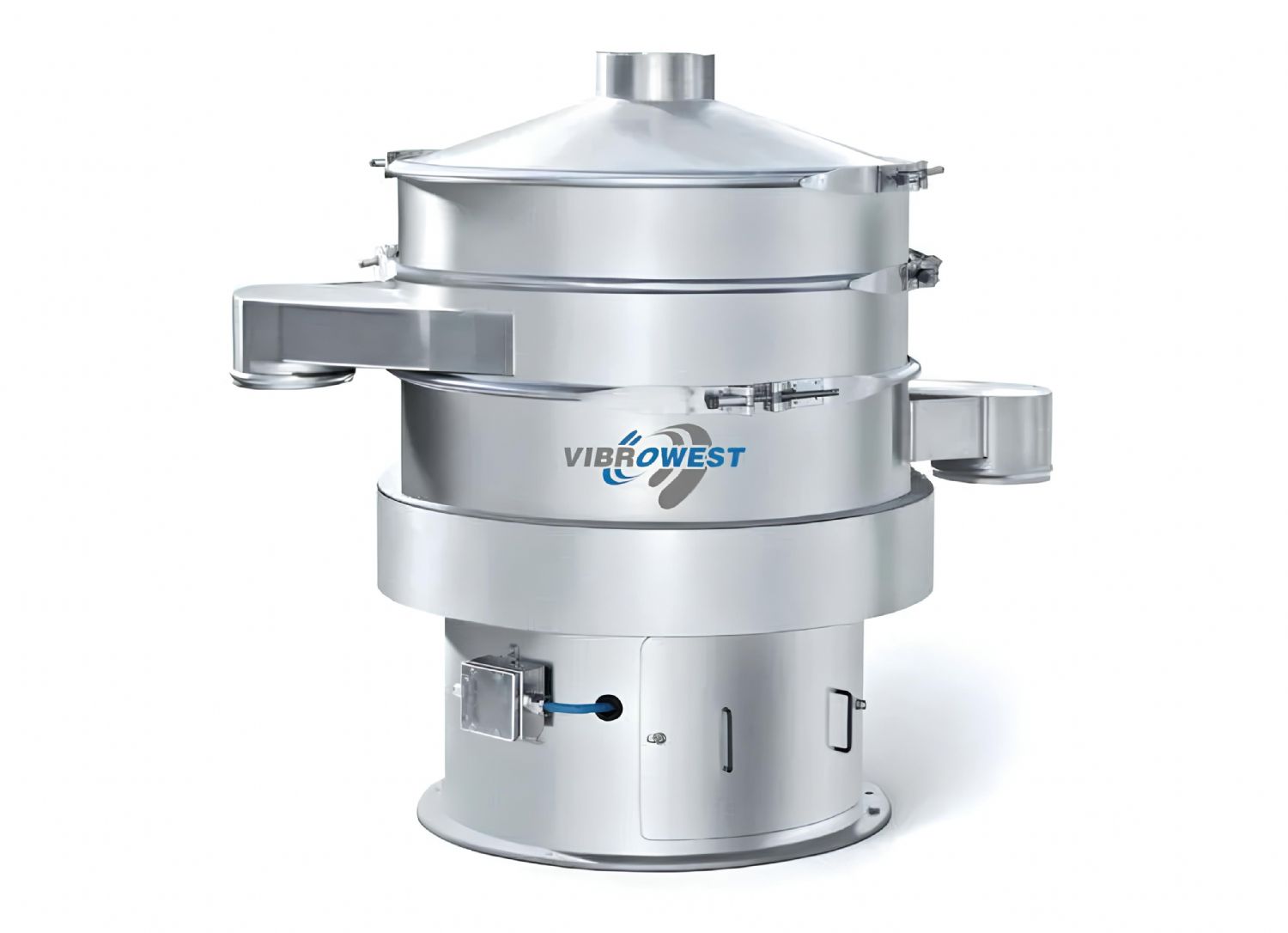
Vibrowest Control Vibrating Screens are vibrating screening systems specifically developed for industrial screening, separation, and particle control applications. These systems are designed to ensure controlled material separation along the process line, precise classification, and the removal of dust or unwanted particles. Thanks to a wide model range and custom manufacturing options, they can be adapted to a broad variety of industrial applications.
General Design Features
• Construction: Mainly manufactured from 304L, 316L, or 316Ti stainless steel, providing high hygiene standards, corrosion resistance, and long service life.
• Modular Manufacturing: Screen diameter, mesh type, and number of decks can be customized according to process requirements.
• Adjustable Vibration: Vibration frequency and direction can be optimized based on the physical characteristics of the material.
• Easy Cleaning: CIP-compatible surfaces and quick-release screen meshes simplify maintenance and cleaning operations.
• Wide Application Range: Suitable for use in food, pharmaceutical, chemical, plastics, recycling, agriculture, mining, and many other industries.
Main Models and Technical Features
MR Circular Vibrating Screener
This model is based on circular vibrating screening technology and is designed for separation, classification, and dust removal.
Key Technical Features:
Particle Size: Suitable for micro powders, capable of classification down to 25 microns.
Operating Principle: A combination of horizontal and vertical vibration components guides the product across the screen surface with optimal contact.
Vibration Adjustment: The vibration pattern can be modified by repositioning the balancing weights on the upper and lower flywheels to match production requirements.
Separation Range: Enables precise separation between 25 µm and larger particle sizes, depending on mesh opening.
Diameter Options: Available in a wide range from Ø 400 mm to Ø 2200 mm, providing flexibility in capacity and process design.
This model belongs to the "control screener" category and offers a highly flexible structure for all industrial applications.
VRR Rectangular Screener
This rectangular vibrating screener combines classification and material conveying functions within a single machine.
Technical Features:
Screen Structure: The rectangular design provides a longer screening surface, making it suitable for higher feed volumes.
Operation: Internal eccentric masses generate combined horizontal and vertical vibrations, allowing the product to move along the mesh while being separated.
Mesh Replacement: Quick and easy mesh removal and installation reduce machine downtime.
Material Options: Can be manufactured in stainless steel or other materials suitable for the specific process.
This model is particularly preferred in high-capacity or continuous production lines.
Ultrasonic 3.0 Vibrating Screeners
Ultrasonic vibration technology is developed to prevent mesh blinding when processing very light or sticky powders.
Key Technical Parameters:
Precision Range: Designed for particles between 0.25 mm and 0.025 mm (25 microns).
Ultrasonic Effect: Ultrasonic frequency is transmitted directly to the mesh wires, preventing clogging and improving material flow.
Efficiency Increase: According to international manufacturer tests, throughput and screening efficiency can increase by up to 10 times.
Controls: Mesh configurations can be stored and managed via a touch-screen operator panel.
Maintenance Advantage: Reduces mesh wear, lowering maintenance costs and extending service life.
This system is especially suitable for very fine powders or difficult-to-separate materials such as FFT-type products.
Operating Principle and Operational Advantages
Control vibrating screens use vibration energy generated by a motor to continuously move material across the screen surface. This vibration, composed of horizontal, vertical, and angular components, ensures constant contact between the product and the mesh. Particles are rapidly separated according to mesh openings; fine fractions pass through the screen while coarser particles remain on top.
Operational Advantages
• High separation accuracy
• Low energy consumption
• Reduced dust and noise levels
• Easy maintenance and cleaning
• Modular structure suitable for seamless process integration
Fields of Application
These screens are widely used in the following industries:
• Food production
• Pharmaceutical and fine powders
• Chemical industry
• Plastic granules and powders
• Recycling lines
• Agricultural product cleaning
• Mining and mineral separation
• Additive manufacturing / 3D powder processes
• Powder coating products
• Metal powder applications
Control vibrating screens provide high-performance solutions for industrial separation and classification, ensuring process continuity, product quality, and production efficiency. They are fully customizable in terms of mesh size, construction material, vibration characteristics, and certification options, making them suitable for both micro-separation and multi-deck screening applications.