Product Descriptions
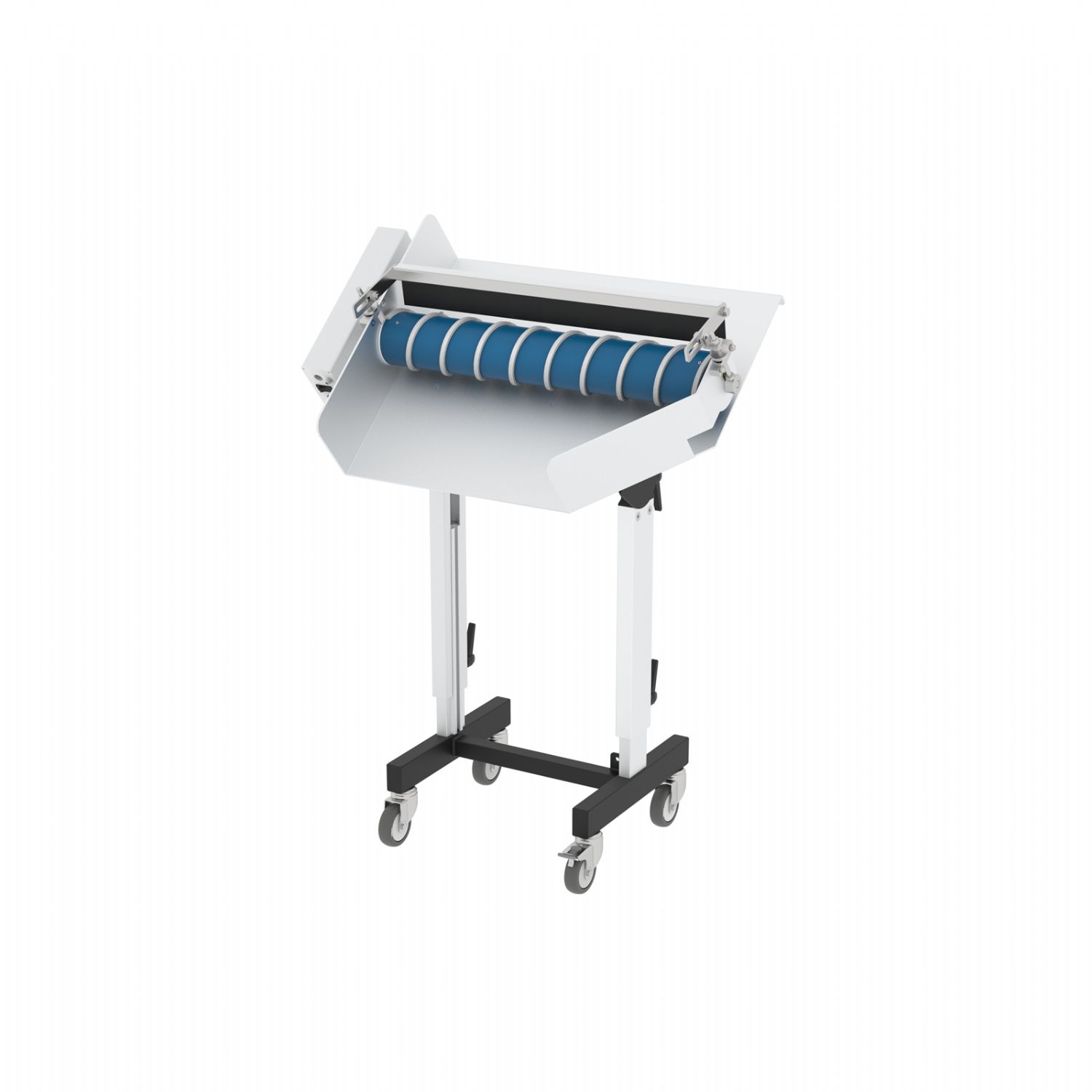
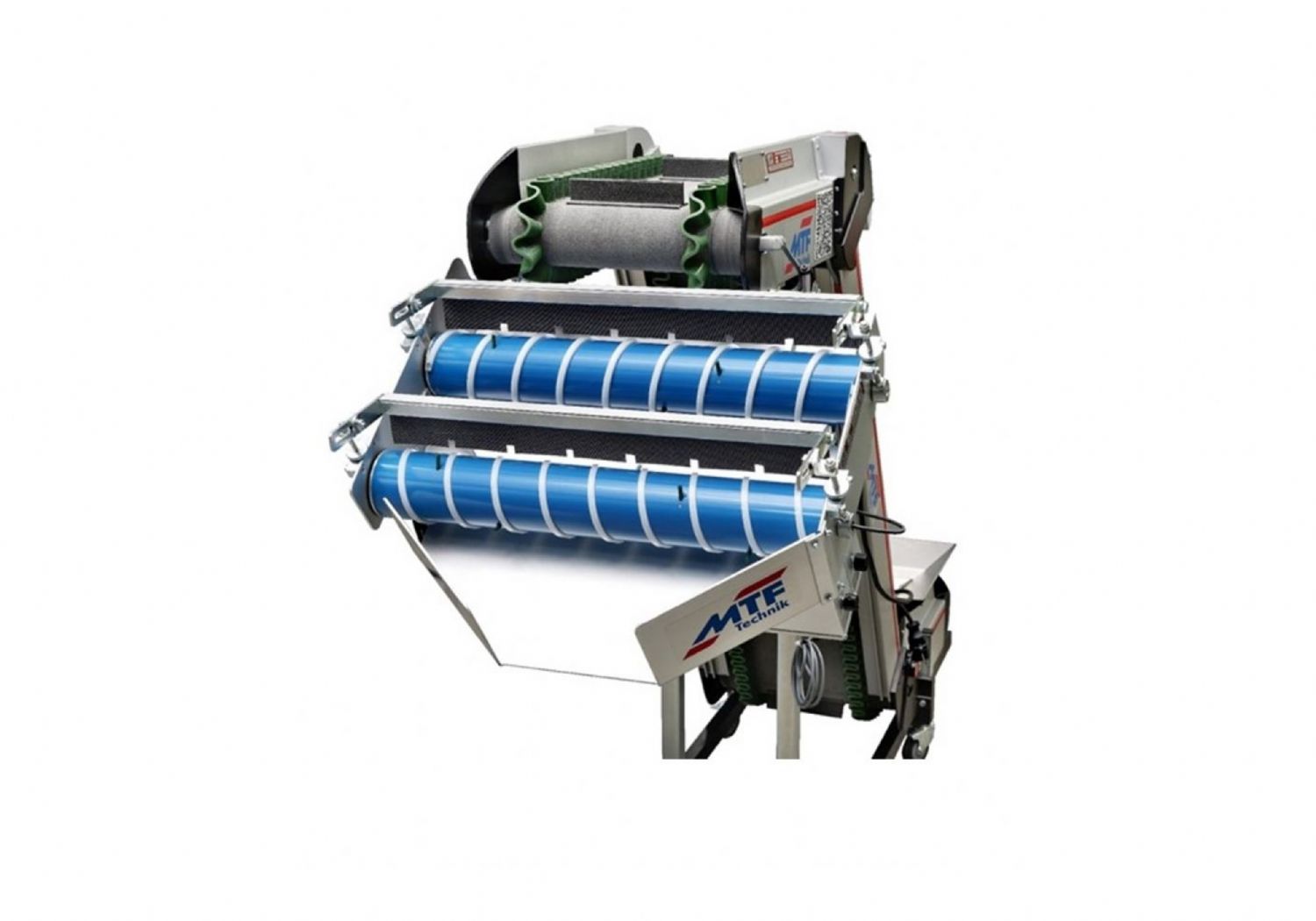
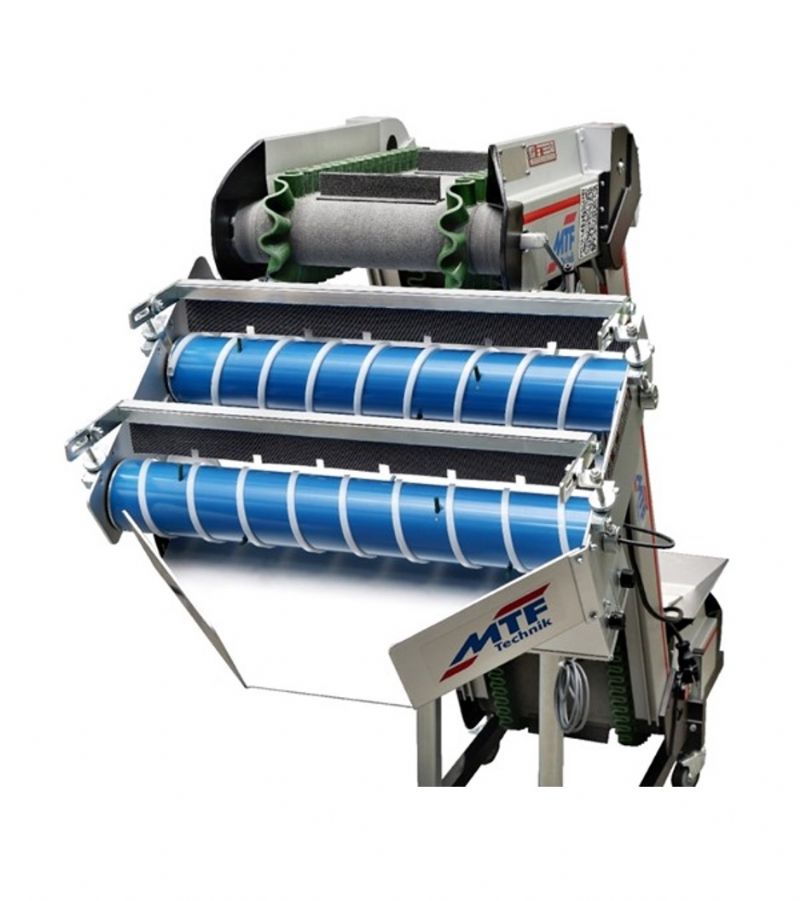
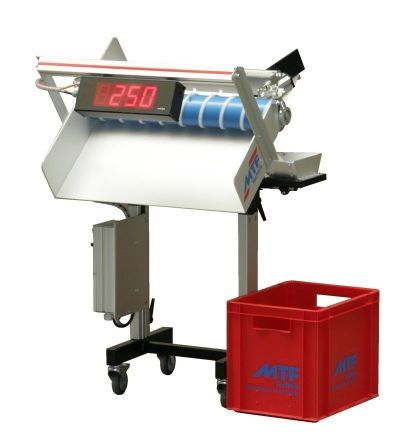
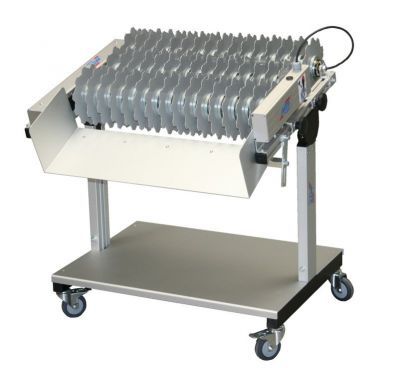
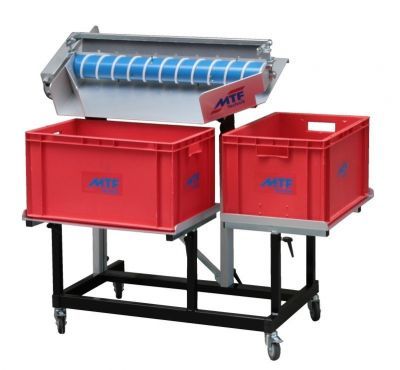
Screw Separators are helical, screw-based separation units used on conveyor lines to guide, divert, or separate parts as they move through a production process. They are specifically designed to sort components based on differences in size, shape, weight, or surface characteristics, while maintaining continuous material flow without interrupting the process.
A screw separator functions as a mechanical guiding element on the conveyor line: a rotating helical screw profile pushes or diverts parts toward a predefined direction depending on their position and geometry.
MTF Technik Screw Separators - Design and Operating Principle
The following explanation refers to solutions developed by MTF Technik.
General Construction of Screw Separators
The main structural components of a screw separator include:
Helical Screw Element
A rotating spiral-shaped screw that physically engages the parts and moves them laterally or longitudinally in the desired direction.
Conveyor Integration
The screw separator is typically mounted directly onto an existing conveyor line. This allows compact installation, minimal footprint, and fast commissioning without major line modifications.
Frame and Housing
The frame is manufactured from stainless steel or industrial-grade coated steel. The rigid construction ensures vibration-free and stable operation, even at high throughput rates.
Drive System
The screw is driven by an electric motor synchronized with the conveyor via an inverter and control unit. This ensures precise speed matching and consistent separation behavior.
Operating Principle
Screw separators operate based on the following mechanical principles:
Spiral Pressure and Directional Guidance
The rotating screw engages the parts on the conveyor and applies controlled lateral force through its helical geometry. Depending on the part's dimensions, weight, and surface geometry, the component is guided toward the correct discharge path or accumulation zone.
Synchronized Speed and Continuous Transport
The screw speed is precisely synchronized with the conveyor speed and part spacing. This enables accurate positioning, loading, stacking, or diverting of parts while they remain in motion.
Reduced Manual Intervention
Thanks to the purely mechanical separation process, manual sorting is largely eliminated. Line stoppages are minimized and overall occupational safety is improved.
Technical Specifications and Performance Parameters
Screw Separator Dimensions
Screw separators can be customized according to line capacity and part size. Typical technical ranges are:
Feature Typical Range
Screw length: 300 mm - 2400 mm
Housing width: 300 mm - 1500 mm
Screw diameter: 50 mm - 250 mm
Drive speed: 10 - 120 rpm
Operating angle: adjustable between 0° - 30°
Housing material: stainless steel or coated steel
These ranges reflect MTF's modular design approach, allowing customer-specific configurations.
Separation Performance
Performance depends on the application and material type, but typical values include:
Separable part diameter range: 2 mm - 80 mm
Processing capacity: 50 - 5000 parts per minute
Separation accuracy: ±0.5 mm
Directional tolerance: ±2° to ±3°
These values can be further optimized by adjusting screw geometry, conveyor speed, and part layout.
Control and Integration Components
Modern screw separator systems are commonly equipped with:
Variable frequency drives for screw and conveyor
PLC-based control systems
Speed sensors and encoders
Optical or photoelectric sensors
I/O interfaces for feedback and synchronization
This configuration enables full synchronization with the production line and enhances process stability.
Application Areas
Plastic Part Production Lines
In injection molding or extrusion lines, screw separators are used at conveyor exits to separate defective parts or route components to different downstream processes. Typical applications include small plastic components, technical plastics, and resin or regrind separation.
Packaging and Logistics Lines
Screw separators guide small containers or components toward the correct packaging direction or feed them accurately into packaging robots before final packing.
Assembly Lines
In automated assembly systems, pre-sorted components are guided toward robotic cells in the correct orientation, ensuring uninterrupted workflow and cycle stability.
Metal Processing and Chip Separation
In pressing or machining operations, metal chips, scrap material, and finished parts can be separated automatically using screw separators, reducing manual handling and improving cleanliness.
Industrial Advantages of Screw Separators
Continuous Operation and High Throughput
The rotating screw design enables uninterrupted separation, eliminating stop-and-go sorting processes.
Process Reliability
Accurate and repeatable part guidance improves overall process consistency and reduces sorting errors.
Operational Cost Efficiency
Reduced labor requirements, shorter downtime, and lower scrap rates result in a lower total cost of ownership.
Example Application Scenarios
Plastic Assembly Line
In a plastic injection molding line, a screw separator enables incorrect-sized parts to be diverted automatically, feeds only approved parts to the robot cell, and provides real-time separation. This significantly reduces quality-related stoppages.
Conveyor-Based Packaging Line
In a logistics system, the screw separator diverts small container components into different paths, while defective items are routed back to a rework loop. Packaging efficiency increases and line interruptions are minimized.
Technical Configurations and System Integration
Screw separator systems can be combined with additional technologies such as vibratory feeding systems, robotic automation, multi-screw modular layouts, sensor-based quality feedback loops, and SCADA or PLC monitoring platforms. These combinations allow seamless integration into Industry 4.0-ready automation environments.
Conclusion - The Value of MTF Screw Separators
MTF Screw Separators are effective mechanical solutions for fast, reliable, and automated part separation on conveyor lines. They ensure correct part routing, automatic diversion of defective components, continuous production flow, and reduced operational costs.
With screw separators, production lines become not only faster, but also more accurate, more stable, and significantly more efficient.