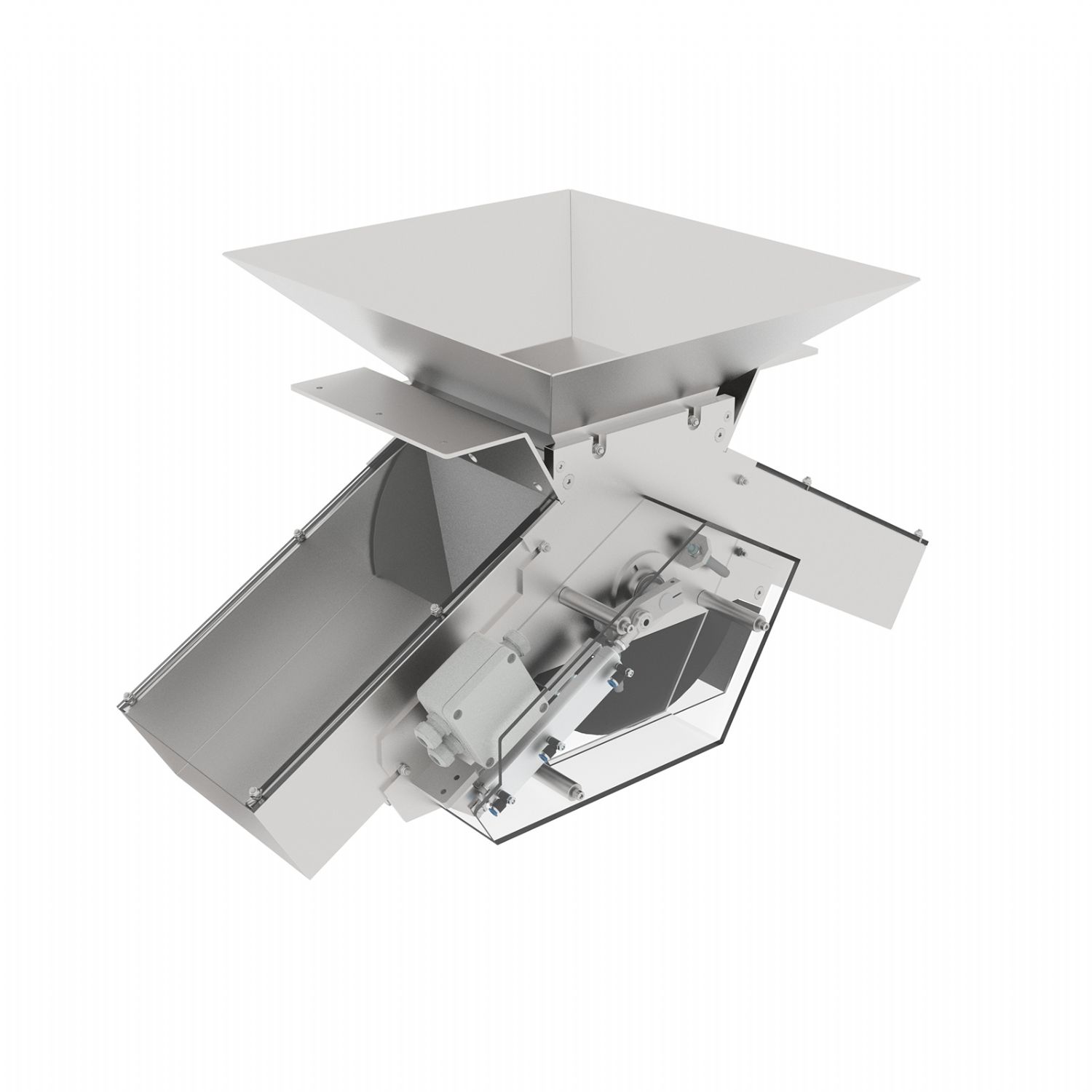
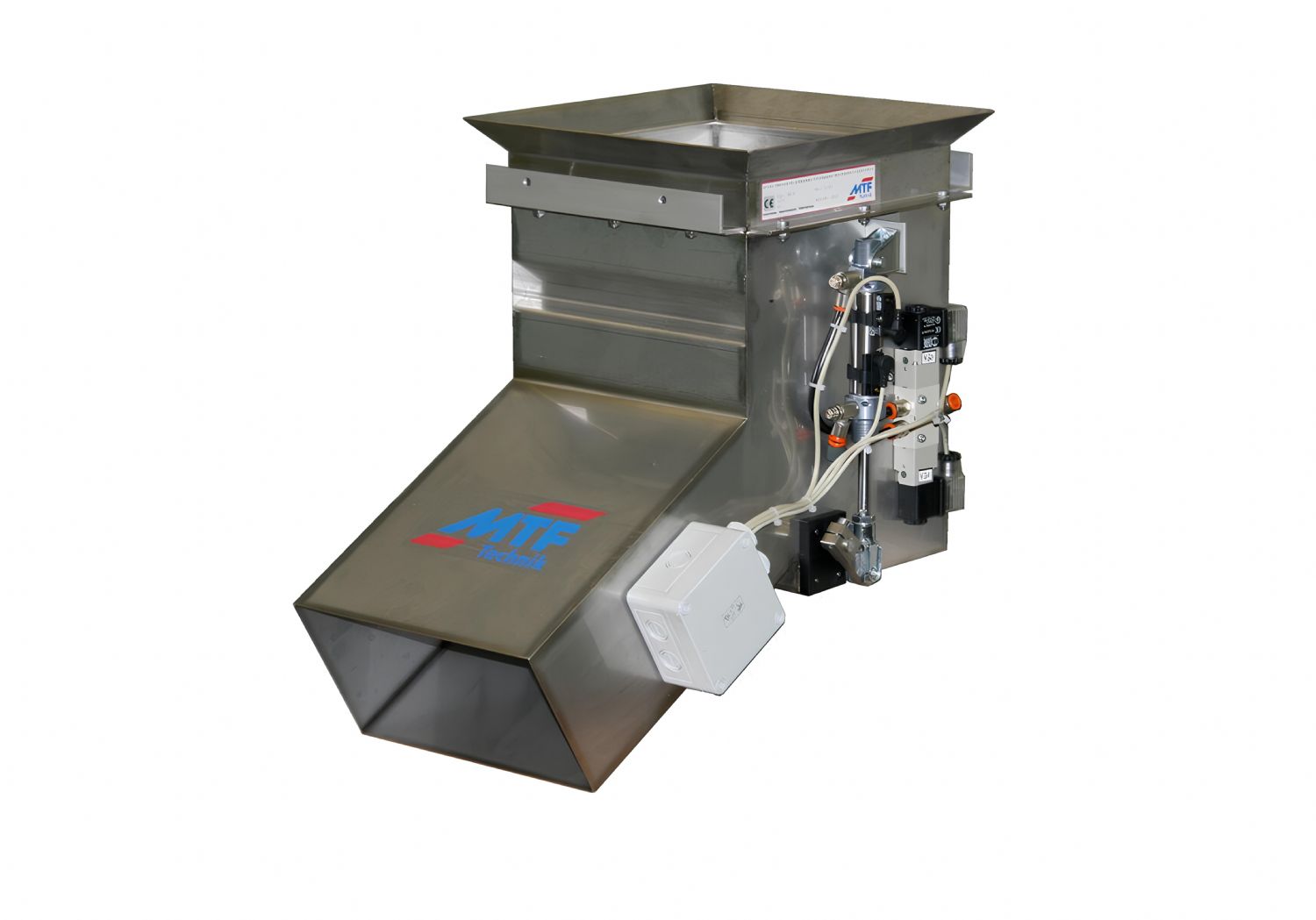
MTF Reject Chutes – Part Sorting and Directional (Diverter) Systems
MTF Reject Chutes are automation components designed for the high-precision separation, diversion, and sorting of material flows in production processes. These systems are particularly used downstream of injection moulding machines, press lines, and other manufacturing processes to direct parts into different categories such as good parts, rejected parts, or start-up parts.
This product group plays a critical role in production line automation by optimizing workflow, supporting quality control processes, and minimizing manual intervention, thereby increasing overall system efficiency. MTF Reject Chutes are offered with process-specific customizable designs, multiple diversion configurations, various drive mechanisms, and stainless-steel housing options.
Product Description and General Features
Reject Chutes are specialized diverter valves used to split material flow into two or more discharge channels. They are commonly installed beneath robot cells, injection moulding machines, and press lines. Functionally:
• Diverters are available for splitting material flow into two or three channels (2-way, 3-way, and multi-way).
• A patented rotary shaft mechanism eliminates the need for side clearances and prevents part jamming.
• Housings and functional components are manufactured as standard from stainless steel, providing advantages in hygienic and clean-room applications.
• Pneumatic, electric, or servo motor drive options address different speed and precision requirements.
• High performance is maintained even at short cycle times, ensuring compatibility with fast production line cycles.
Mechanical Design and Structure
MTF Reject Chutes generally consist of the following main mechanical components:
Housing Structure
• Stainless steel housing: All surfaces and diverter channels in contact with production parts are typically manufactured from stainless steel, ensuring high resistance to corrosion and wear.
• Special surface options: Smooth, textured, or coated surface finishes are available depending on product requirements.
Diversion Mechanisms
MTF Reject Chutes perform the diversion function using the following mechanisms:
• Patented rotary shaft mechanism: Prevents part jamming without requiring side clearance, offering low wear and reduced maintenance requirements.
• Replaceable flap (butterfly) mechanism: Enables controlled material flow diversion for two or three outlet channels.
Drive Options and Control
MTF Reject Chute models are available with different drive types:
Pneumatic Drives
• Simple and robust design
• Ideal for standard industrial environments
• Typical switching cycle times of approximately 1.0 to 1.5 seconds for pneumatic flap diverters
Electric Drives
• Electric motor-driven systems provide variable speed and precise control
• Cable interfaces allow easy integration into production line control systems
Servo Motor Drives
• High-speed and high-precision part diversion
• Cycle times can be reduced to below 0.3 seconds, making them suitable for lines with highly critical cycle times
2-Way, 3-Way, and Multi-Way Reject Chute Configurations
MTF Reject Chutes can be designed in the following configurations depending on production requirements:
2-Way Reject Chutes
• Used for two-direction material separation
• Suitable for basic diverter applications
• Operating times approximately 1.0 to 1.5 seconds with pneumatic flap drives
3-Way Reject Chutes
• Distribute parts into three different outlet channels
• Suitable for quality control, sprue separation, or serial inspection processes
• Operating times can be standardized at approximately 1.0 to 1.5 seconds with pneumatic flap drives
Multi-Way (4-Way, Combined) Solutions
• Combination diverters for more complex routing and distribution requirements
• Advanced models combining rotary shaft and flap technologies
• Modular design for customized and special applications
Technical Performance and Parameters
• Number of diversion paths: 2-way, 3-way, and multi-way configurations
• Main material: Stainless steel (housing and diverter components)
• Drive types: Pneumatic, electric, and servo motor
• Cycle time: Pneumatic ≥ approx. 1.0 second; Servo ≤ approx. 0.3 seconds for high-speed applications
• Mounting positions: Parallel to machine axis, angled, or downward-directed installations
• Electrical interfaces: Wired or modular connections according to user requirements
Application Areas
MTF Reject Chutes are widely used in the following production areas and processes:
• Downstream of injection moulding machines for part routing and reject separation
• Press machines for material flow distribution
• Robot cells for automatic feeding and sorting
• Manufacturing lines for quality control and sprue separation
• Conveyor discharge points for multi-point material distribution
Advantages – Technical and Operational
• Patented anti-jamming mechanism: The rotary shaft design ensures clean and uninterrupted material flow.
• Fast cycle times: Servo motor options enable high-performance diversion with cycle times below 0.3 seconds.
• Modular and customizable design: Engineered specifically for each production line, machine type, and layout.
• Stainless steel housing: Suitable for hygienic environments and clean-room conditions.
• Multiple drive options: Pneumatic, electric, and servo drives allow optimal selection according to process requirements.