Product Descriptions
DEKUMA AUTOMATED RUBBER TRACK PRODUCTION LINE
AUTOMATIC RUBBER TRACK MANUFACTURING LINES
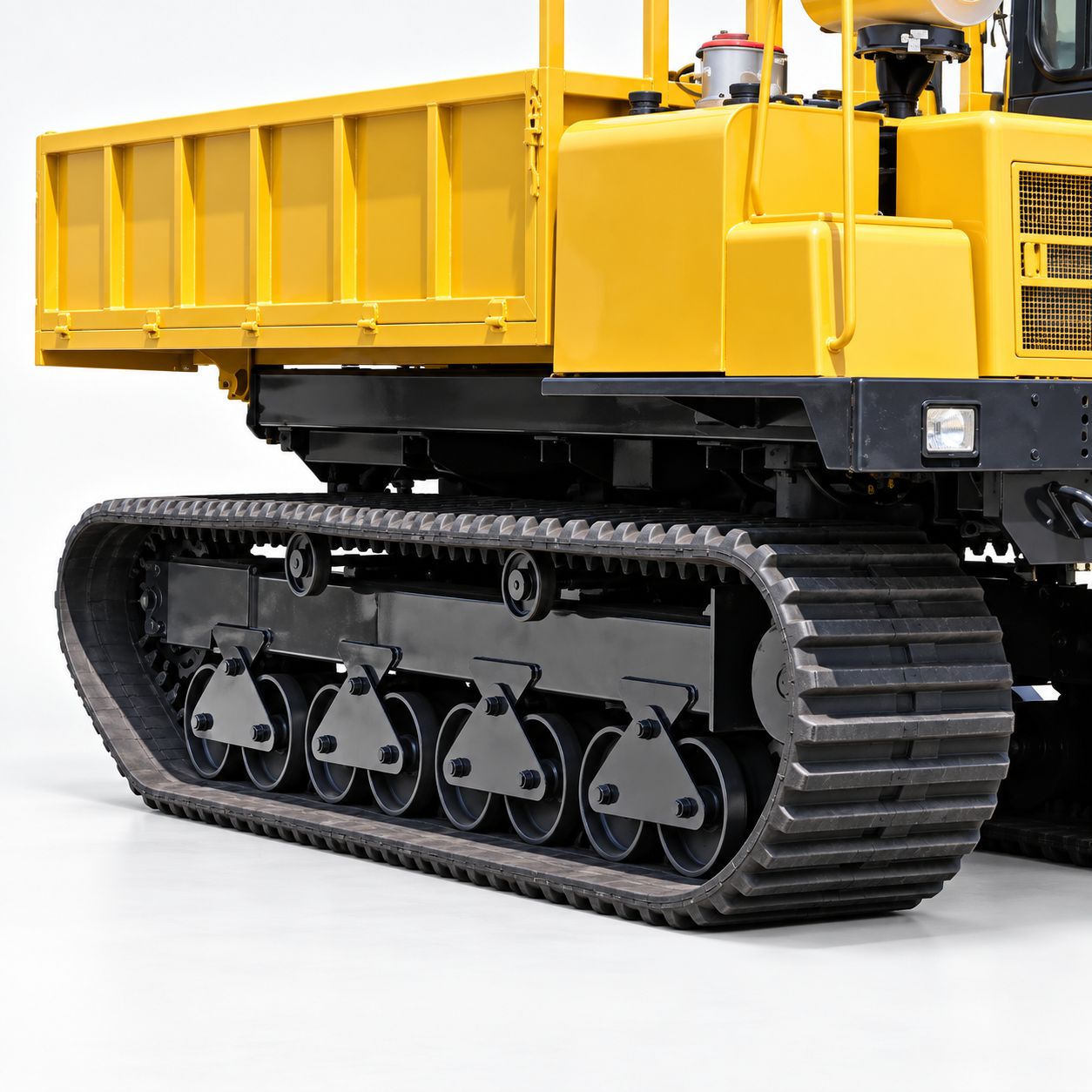
The Dekuma Automated Rubber Track Production Line is an integrated manufacturing solution designed for the fully automatic, high-precision production of rubber tracks used in mini excavators, agricultural machinery, construction equipment, military vehicles, and specialized tracked transport systems. These systems are specifically developed for rubber track applications that require high tensile strength, superior wear resistance, and long service life.
Developed based on Dekuma's engineering expertise in heavy industry and rubber processing technologies, the automated track production lines are widely preferred by global OEM and Tier-1 track manufacturers thanks to their high-tonnage pressing capability, multi-layer structure control, and stable vulcanization processes.
RUBBER TRACK MANUFACTURING TECHNOLOGY AND OPERATING PRINCIPLE
Rubber track manufacturing is an advanced production process that requires the forming of multi-layer composite structures under high pressure and long curing cycles. Dekuma Automated Rubber Track production lines operate using fully automatic pressing and vulcanization technology specifically designed to meet these requirements.
Main process steps include:
• Preparation and layering of the rubber compound
• Automatic placement of steel cords, fibers, or reinforcement elements
• Precise positioning of the track body inside the mold
• Pressing under high clamping force
• Long-duration vulcanization at controlled temperature
• Cooling, shape stabilization, and automatic demolding
This process ensures excellent performance of the tracks in terms of tensile strength, flexibility, and wear resistance.
PRODUCTION LINE CONFIGURATION AND AUTOMATION LEVEL
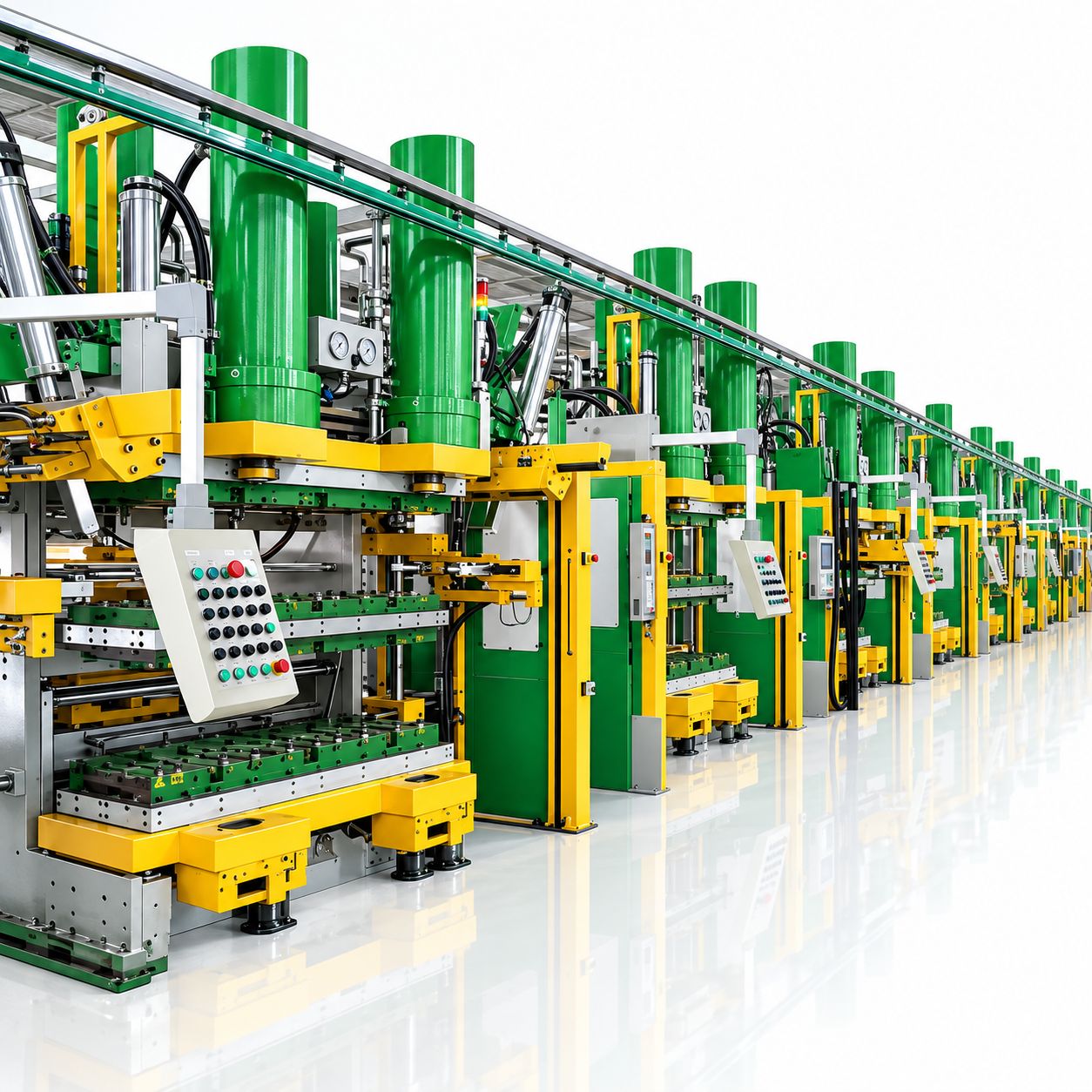
Dekuma automated rubber track production lines can be configured as fully automatic or semi-automatic systems, depending on the type of track to be produced and the required production capacity.
Typical line components include:
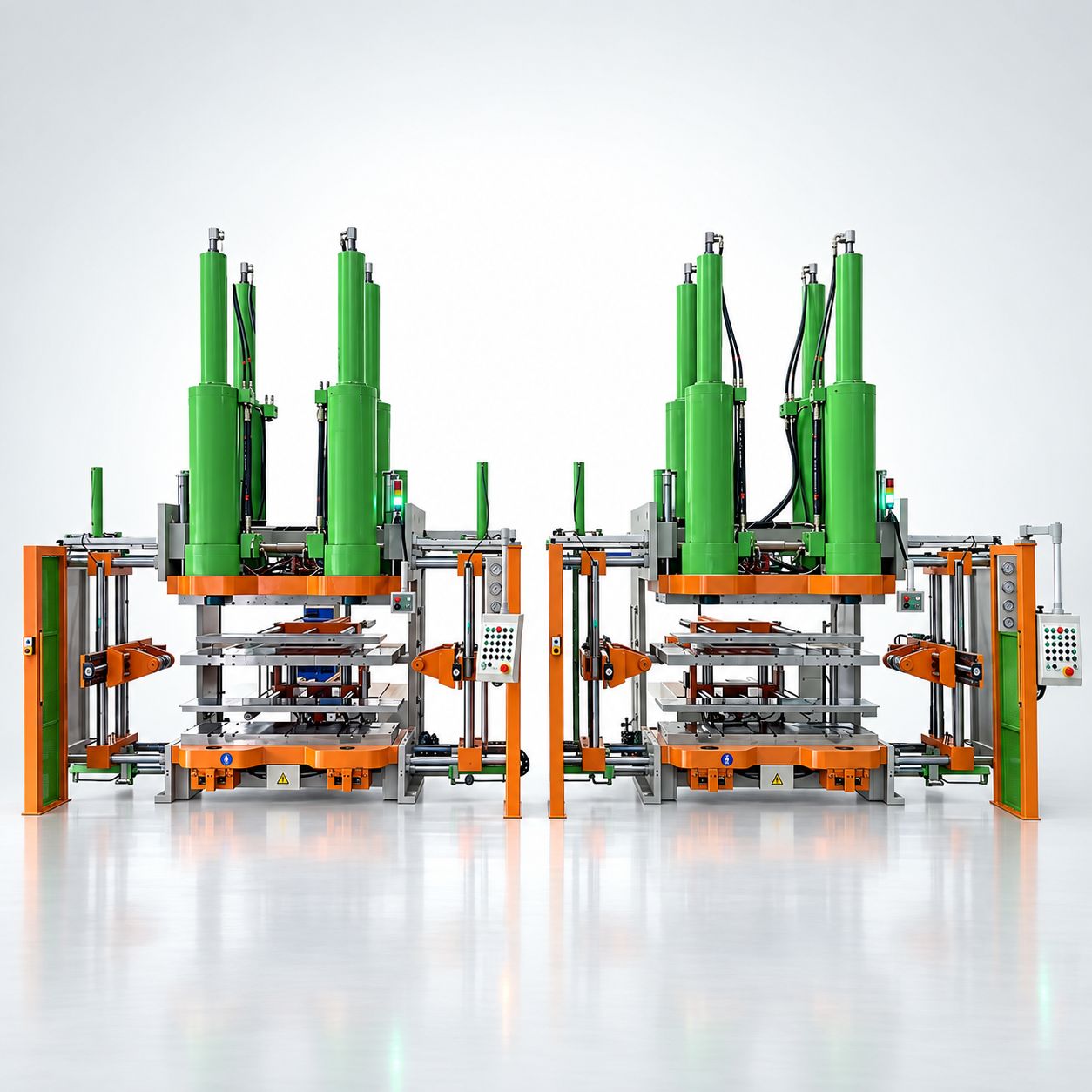
• High-tonnage rubber track presses
• Multi-cavity or single-cavity track molds
• Central hydraulic power unit
• Mold heating and temperature control system
• Automatic material feeding and reinforcement placement units
• Conveyor and robotic handling systems
This configuration allows the production of tracks with different lengths, widths, and profile geometries on the same production line.
PRESS STRUCTURE AND CLAMPING FORCES
Rubber track manufacturing requires high pressure and large mold volumes. The press systems used by Dekuma are designed as heavy-duty solutions.
Typical clamping force ranges include:
• 5000 kN - 15,000 kN
• Higher tonnage press solutions for special projects
The high clamping force ensures uniform compression of the track body inside the mold and perfect bonding between layers.
TECHNICAL AND NUMERICAL SPECIFICATIONS
Typical technical parameters of the Dekuma Automated Rubber Track Production Line systems are provided within the following ranges:
Track Length Range
• 800 mm - 4000 mm
Track Width
• 150 mm - 600 mm
Vulcanization Temperature
• 140 °C - 180 °C
Curing Time
• 30 - 90 minutes, depending on track size and layer structure
Press Stroke
• 600 - 1500 mm
Heating System
• Electric or oil-based heating
• Multi-zone PID temperature control
Hydraulic System
• Servo-controlled hydraulic drive
• High pressure stability with low energy consumption
These values can be customized according to the type of rubber track to be produced.
HYDRAULIC SYSTEMS, HEATING, AND PROCESS STABILITY
The hydraulic systems used in Dekuma rubber track production lines are designed to operate stably under high pressure for extended periods.
Key advantages include:
• Stable press force during long cycle times
• Low energy consumption
• Stable hydraulic oil temperature
• Long system and component service life
The heating systems maintain balanced temperature distribution inside the mold, significantly improving vulcanization quality and product consistency.
AUTOMATION AND PRODUCTION EFFICIENCY
Dekuma Automated Rubber Track Production Line systems can be supplied with Industry 4.0-compatible automation infrastructure.
Automation options include:
• Automatic track loading and unloading
• Robotic reinforcement and material placement
• Centralized production monitoring and recipe management
• Temperature, pressure, and cycle time data recording
• Quality monitoring and fault detection systems
This structure reduces operator dependency in high-volume production and ensures consistent product quality.
APPLICATION AREAS
Dekuma automated rubber track production lines are widely used in the following applications:
• Mini and medium-sized excavator tracks
• Agricultural machinery rubber tracks
• Construction and road equipment
• Military and specialized tracked vehicles
• Industrial material handling systems
Rubber tracks are critical in these applications due to their low vibration, ground protection, and long service life advantages.
ADVANTAGES OF THE DEKUMA AUTOMATED RUBBER TRACK PRODUCTION LINE
• High-tonnage, heavy-duty press structure
• Homogeneous vulcanization and high mechanical strength
• Fully automatic and scalable line design
• Flexible structure compatible with different track types
• Low maintenance requirements
• Long system and machine service life
• Global service and engineering support