Product Descriptions
Water Injection (Water Injection Technology - WIT)
Water Injection Technology (WIT) is an advanced manufacturing method in plastic injection molding processes where water is used instead of gas. This technology provides high precision and superior surface quality, especially in the production of thick-walled and hollow parts.
The water injection systems offered by Stieler provide not only equipment but also complete engineering solutions covering the entire process. The system is optimized to ensure that water is completely removed from the mold after injection.
Since water has a significantly higher cooling capacity compared to gases, it shortens cycle times and enables more stable part geometry.
System Advantages
Water injection technology offers significant advantages in production processes:
Shorter cycle times due to faster cooling
More uniform and controlled hollow structure
High surface quality
Superior stability in thick-section parts
Reduced risk of deformation and sink marks
Material savings and lightweight advantages
Working Principle
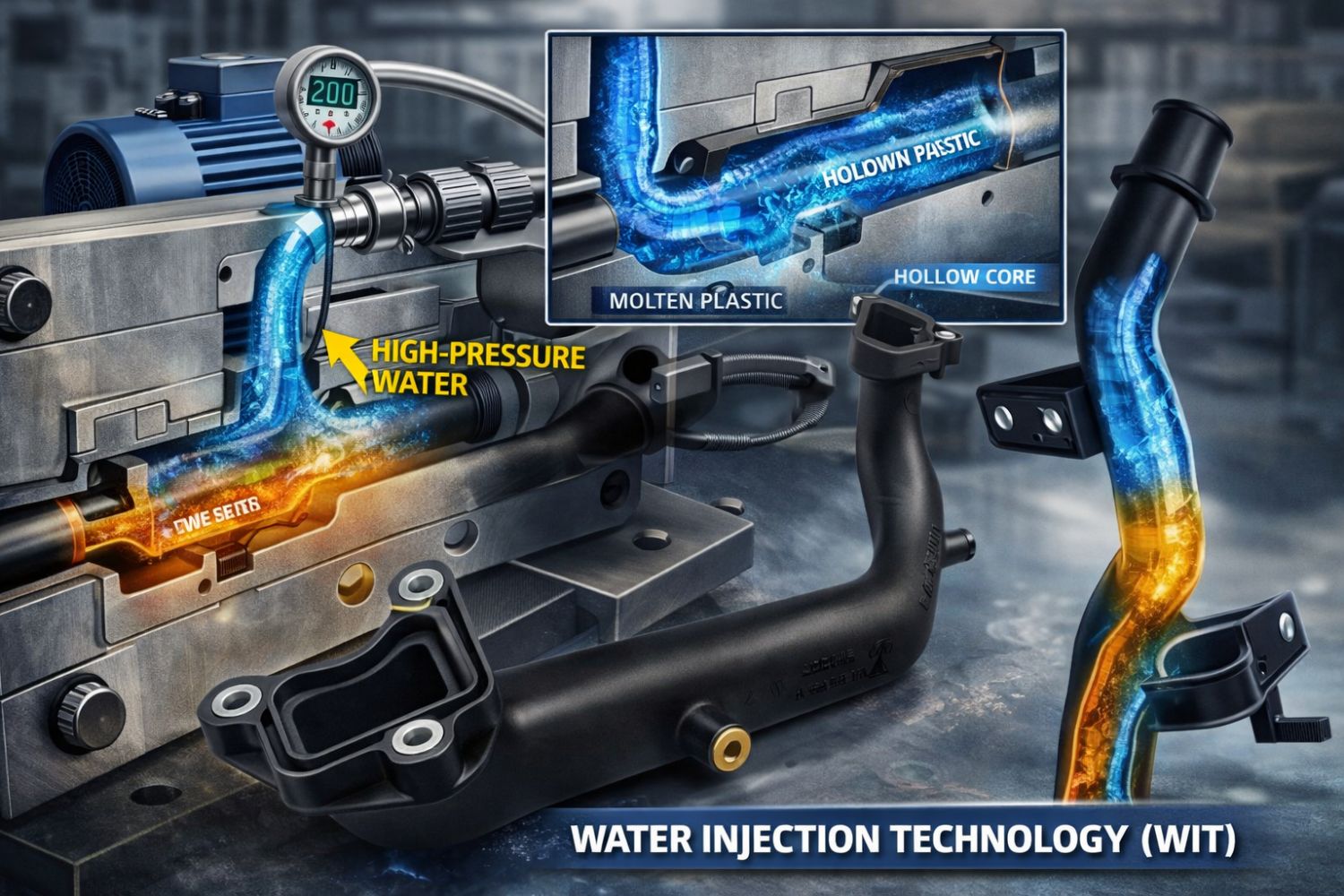
The process begins with the injection of molten plastic into the mold cavity. High-pressure water is then injected into the molten material, penetrating through the center and displacing the core material.
This process results in uniform wall thickness and creates a controlled internal channel structure. Water injection technology enables the production of pipe-like and complex geometries in a single step.
Application Areas
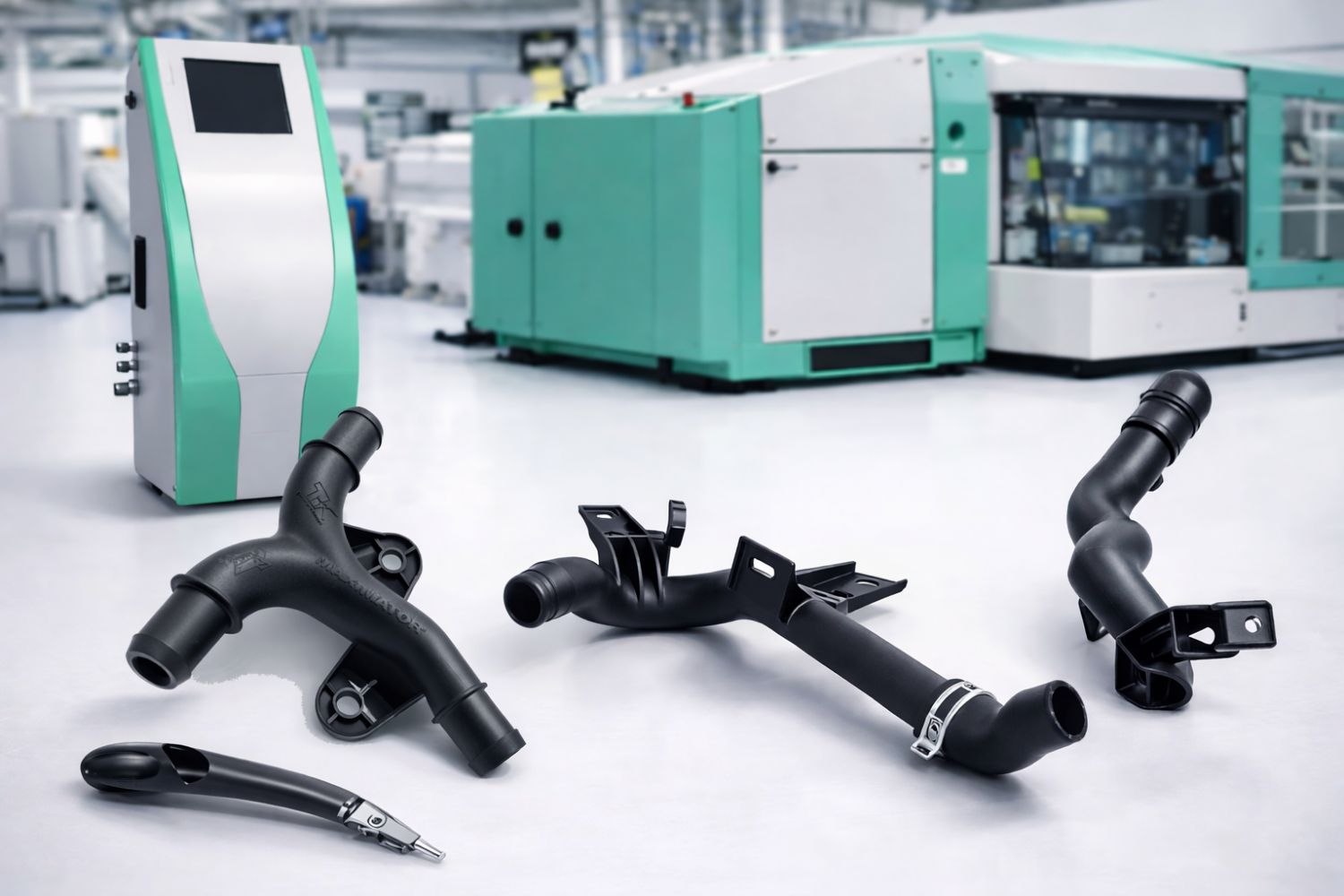
Automotive components (cooling lines, pipes, handles)
Home appliance and HVAC components
Furniture and technical plastic parts
Hollow products such as pipes and profiles
Complex geometries and thick-walled plastic parts
Water Injection vs Gas Injection
Compared to gas injection systems, water injection technology provides faster cooling and a more defined internal channel structure. Therefore, it is particularly advantageous for applications requiring high surface quality and precise geometries.