Product Descriptions
Flexible Silo Systems for Plastic Raw Materials
High-Capacity, Durable, and Economical Raw Material Storage Solutions
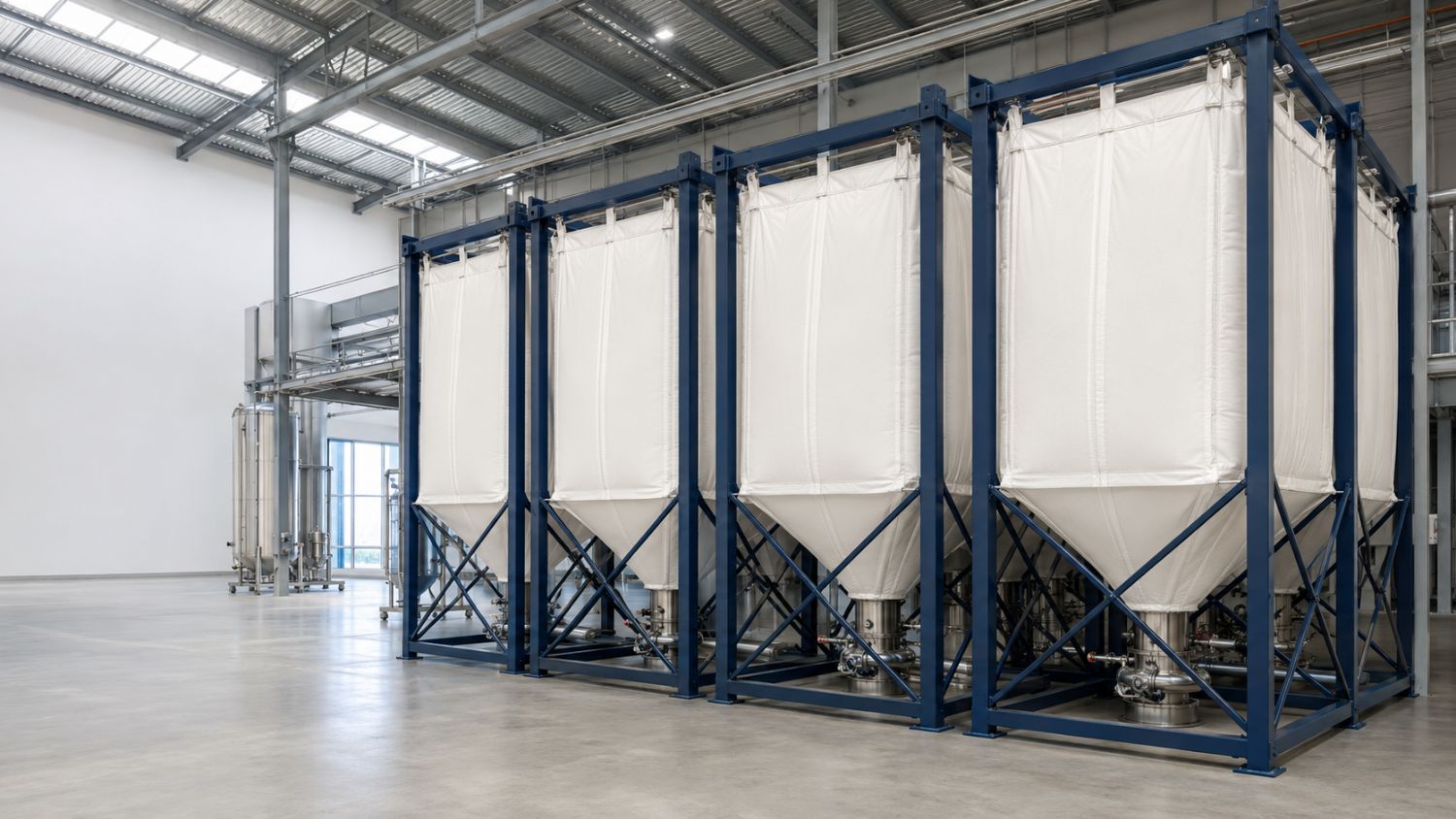
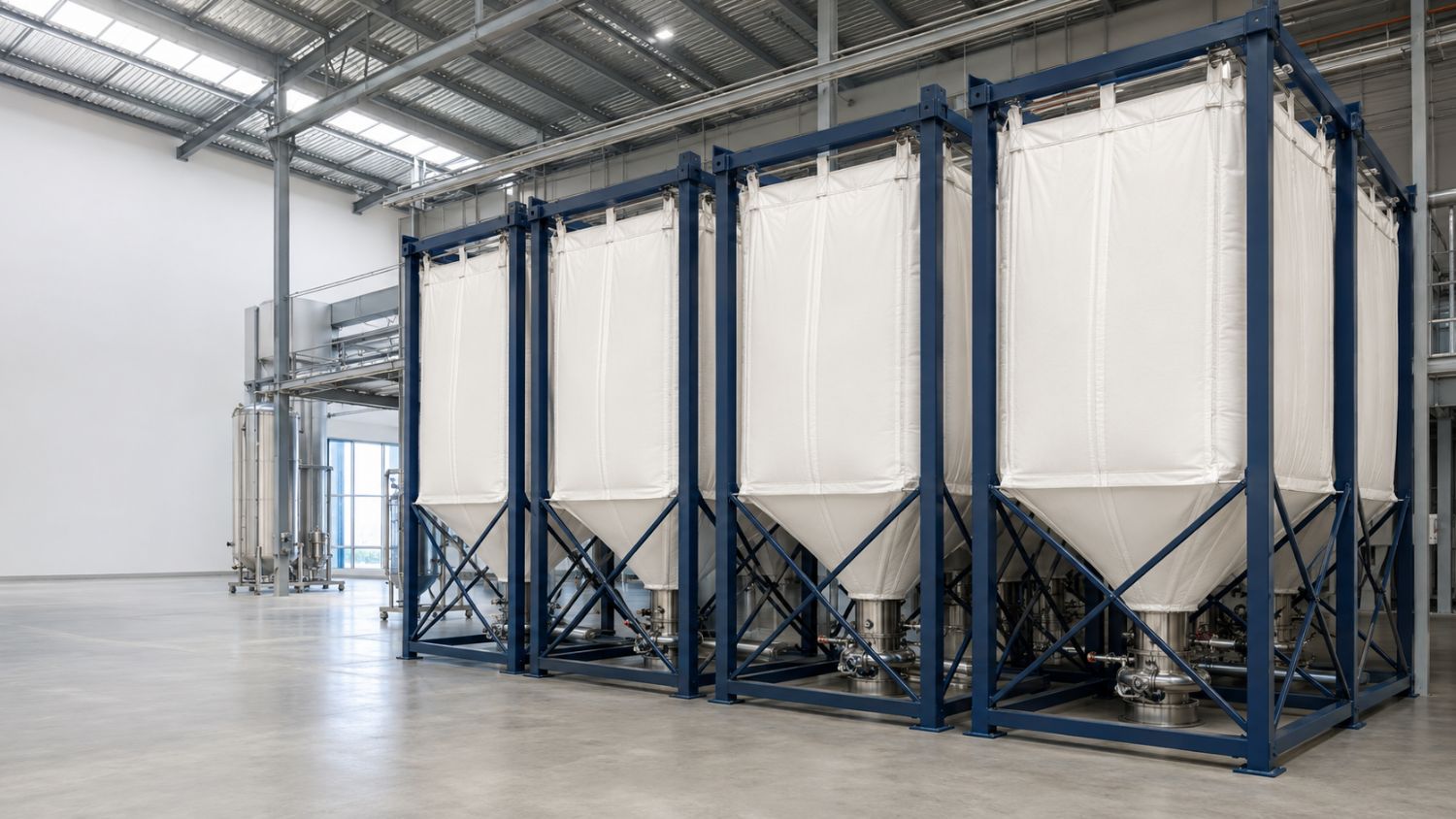
Flexible silo systems are designed for the safe and efficient storage of plastic granules, crushed materials, powders, and various bulk raw materials within factories. Combining robust steel construction with a high-strength technical fabric hopper, these systems offer a strong alternative to classic silo solutions, especially in production facilities where efficient use of space is required.
Flexible silos, which can be sized according to the factory's existing ceiling height, layout, the characteristics of the material to be stored, and the required capacity, enable the filling, storage, and emptying processes to be carried out in an integrated manner with a central raw material handling system.
Robust Steel Construction and Technical Fabric Hopper
Flexible silos consist of a durable steel support structure suitable for long-term industrial use and a high-strength fabric hopper independently suspended within this structure.
Technical fabric used for storing granular, crushed, and coarse-grained raw materials:
* High tear resistance.
* Breathable structure reduces condensation formation.
* Offers suitable properties against electrostatic charging.
* Available with options suitable for food contact.
* Helps in unloading the material from the silo without sticking and with minimum residue.
For the storage of powder products, coated or filter-featured special fabric options can also be used. The fabric type is determined by considering the particle size, flow behavior, density, moisture sensitivity, and other physical properties of the material.
Standard Storage Capacity Up to 50 Tons
Standard flexible silo systems can be manufactured with a storage capacity of up to 50 tons. Depending on project conditions and the characteristics of the material to be stored, the capacity can be increased up to 60 tons.
This high capacity allows for the storage of up to two truckloads of raw materials within the factory. This ensures continuity in the raw material supply to the production line while reducing the impact of possible delays in delivery schedules on production.
The following criteria are considered when determining silo dimensions:
* Bulk density of raw material
* Daily and hourly material consumption
* Desired total storage capacity
* Available floor space of the factory
* Ceiling height and building layout
* Filling and emptying method
* Capacity of the raw material handling system
* Flow and moisture characteristics of the material
Custom Design for the Factory Area
One of the significant advantages of flexible silos is their adaptability to the existing production area. Rectangular or square base dimensions, different height options, and project-specific steel construction allow for the most efficient use of available space within the factory.
These systems, installed indoors, can reduce the need for a special silo foundation and some additional construction work that may be required for outdoor silos. This feature facilitates the retrofitting of flexible silo systems into existing factories.
Thanks to its modular structure, the system can be disassembled, moved to another location, and reassembled when necessary. Compact shipping dimensions provide advantages in terms of transportation and assembly costs.
Filling Flexible Silos
Flexible silos can be filled using different methods depending on the production and logistics structure of the facility:
* Pneumatic pressure filling with a silo truck
* Filling with a vacuum raw material conveying system
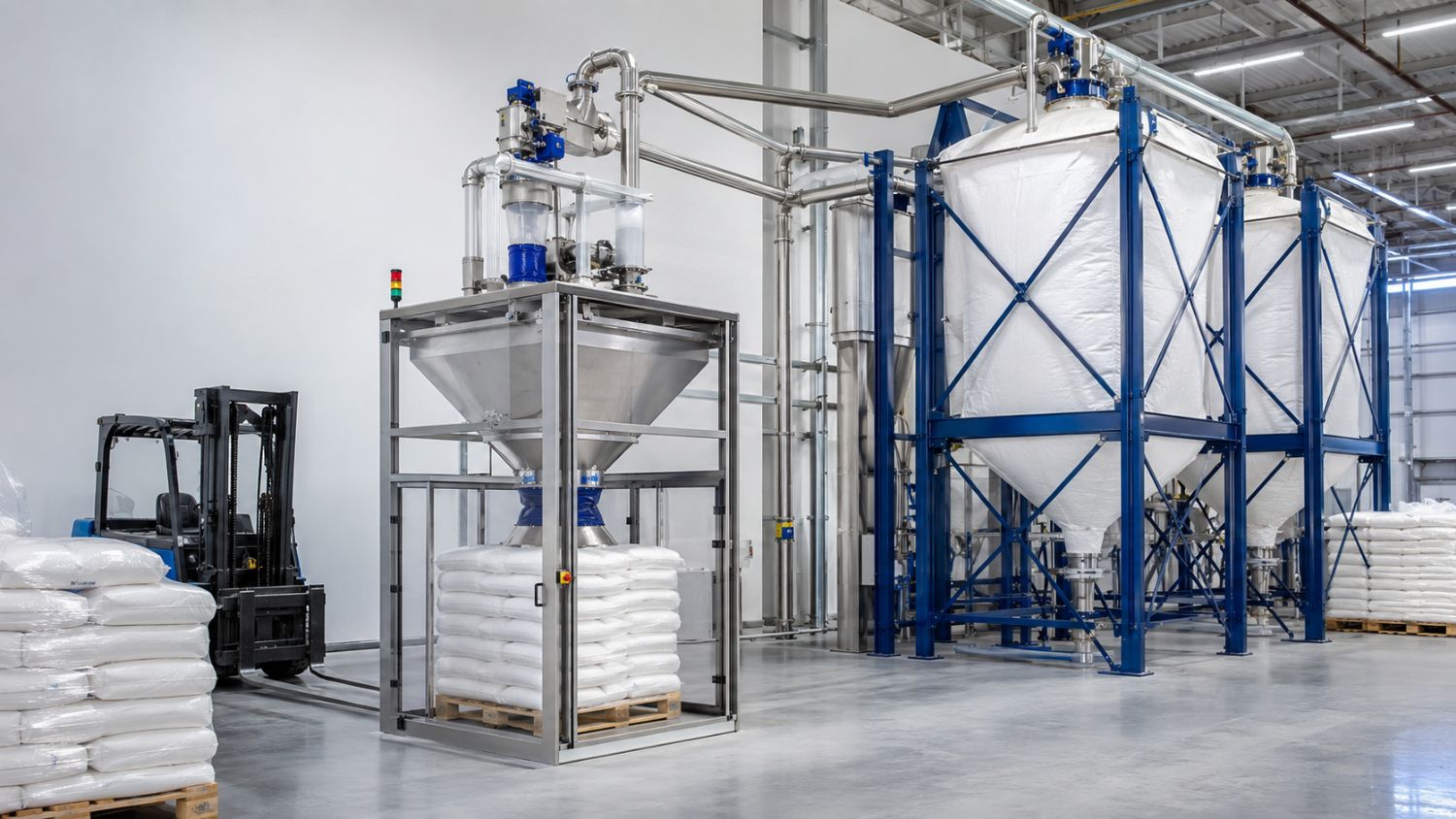
* Filling from a big bag unloading system
* Filling from a sack unloading station
* Filling with a mobile or stationary pressure conveying unit
Raw materials delivered in sacks can be received into the factory in pallets and directed to an automatic sack unloading system. The raw materials unloaded from the sacks are transferred to the flexible silos in a controlled manner via a suitable pneumatic conveying system.
Large-diameter filling lines help to transport raw materials at high capacity and as precisely as possible. The system can be designed to reduce material breakage, dust formation, and environmental pollution.
Reliable and Efficient Unloading
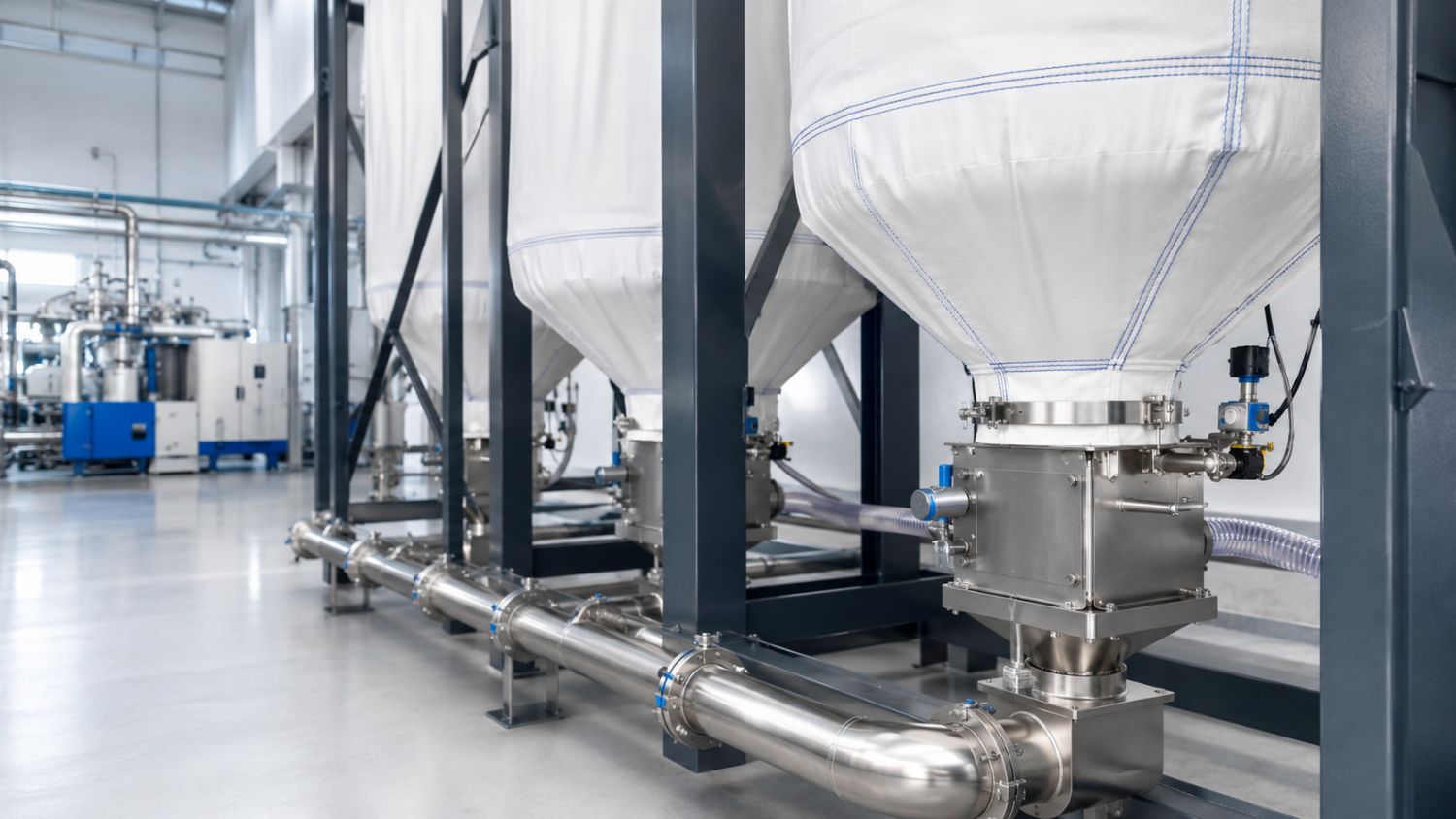
The lower section of the flexible silo chamber has a special geometry that supports the regular flow of stored material towards the unloading point. Depending on the characteristics of the material, suitable unloading equipment can be added to the silo outlet.
Available equipment includes:
* Stainless steel suction boxes
* Manual or pneumatic gate valves
* Rotary valves
* Dosing systems
* Vibration or flow assist equipment
* Vacuum conveying couplings
* Pneumatic conveying lines
Choosing the correct fabric and discharge geometry helps reduce the amount of material remaining in the silo and allows for more controlled product changes.
Integration into a Central Raw Material Handling System
Flexible silos are integrated into central raw material handling systems in plastic injection, extrusion, blow molding, and compound production plants.
It can be integrated into existing systems.
Plastic raw material taken from the suction box at the silo outlet can be sent via a vacuum conveying line to dryers, intermediate hoppers, dosing systems, or directly to production machines.
The following control and monitoring equipment can be added to the system:
* Minimum and maximum level sensors
* Continuous level measurement systems
* Filling and emptying control
* Overflow protection
* Automatic valve control
* PLC-based control system
* Communication with central plant automation
* Remote monitoring and web-based visualization
Thanks to this integration, raw material flow can be centrally controlled, uninterrupted material supply to production machines can be ensured, and operator intervention can be reduced.
Suitable Solutions for Different Raw Materials
Flexible silo systems can be used for storing various bulk products, provided that the appropriate fabric and unloading equipment are selected according to the material properties:
* Plastic granules
* Recycled granules
* Crushed plastic materials
* Powdered raw materials
* Masterbatch and additives
* Mineral fillers
* Coarse-grained bulk materials
* Food-contact granular raw materials
For each project, the flow behavior, abrasiveness, temperature, humidity sensitivity, and electrostatic properties of the product to be stored must be evaluated separately.
Advantages of Flexible Silo Systems
* Standard capacity of 50 tons, up to 60 tons depending on the project
* Customizable design according to factory dimensions
* Efficient use of floor space and building height
* Durable and long-lasting steel support structure
* Tear-resistant technical fabric hopper
* Low condensation risk thanks to breathable fabric
* Discharge structure that helps reduce material residue
* Different fabric options for granules, crushed materials, and powders
* Full integration with central raw material handling systems
* Easy shipping, assembly, disassembly, and reinstallation
* Lower infrastructure requirements compared to outdoor silos
* Strong price-performance balance
Flexible Silo Solutions Customized to Your Project
At Polmak Plastik, we evaluate the characteristics of the raw material to be stored, the required capacity, the physical conditions of the factory, and the existing production system together.
The flexible silo system can be configured specifically for the project, including steel construction, technical fabric hopper, filling line, discharge equipment, level control, and central raw material handling connections.
Contact us to determine the correct silo capacity and appropriate system configuration for your facility.