Product Descriptions
Under Water Strand Pelletizing Systems - Detailed Technical Description & Features
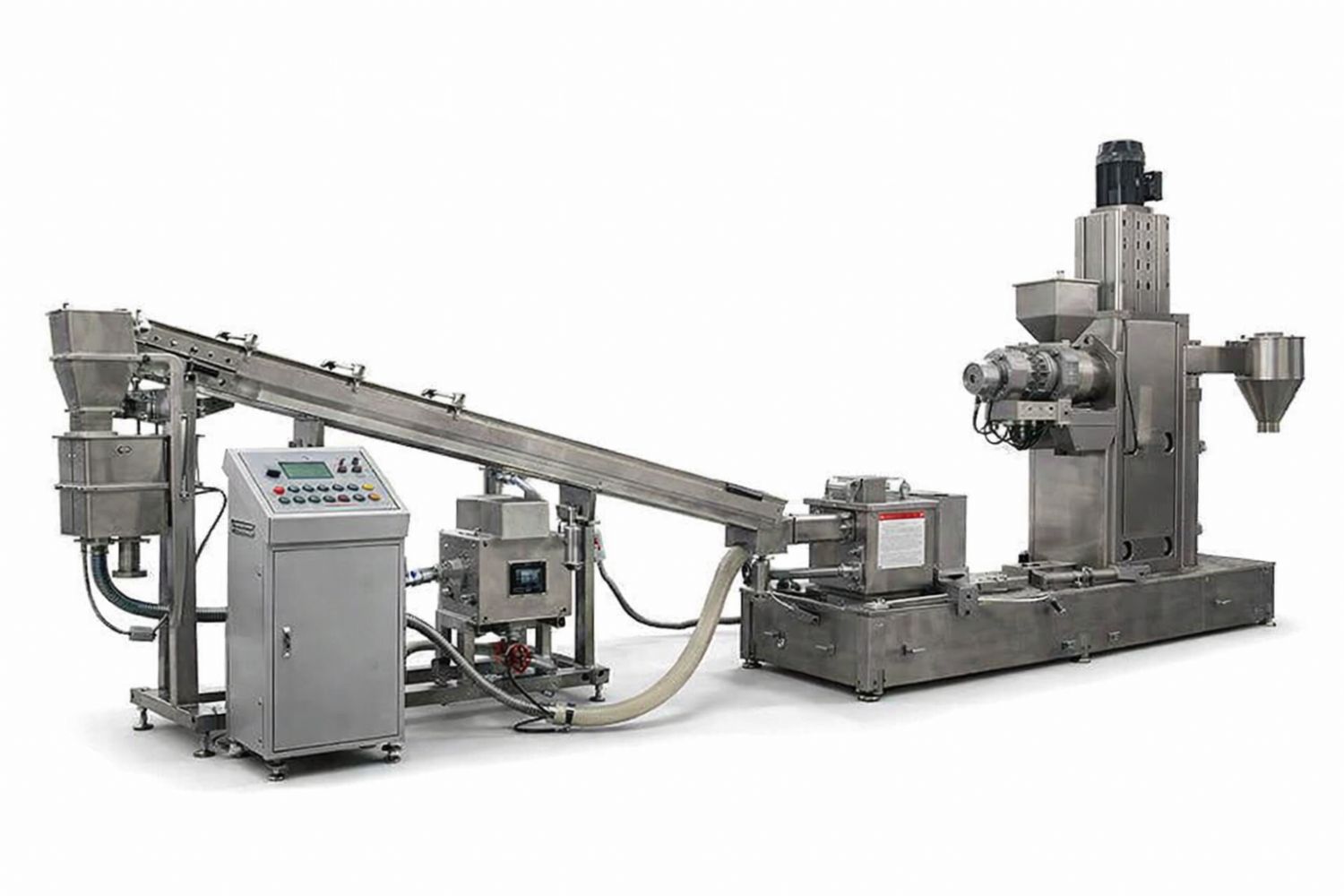
The Under Water Strand Pelletizing System is a water-based strand-type pelletizing technology designed for plastic recycling and polymer granule production. It is positioned as an ideal solution in recycling processes where frequent screen changes are required and where high-efficiency production with minimal waste is critical.
This system enables fully automated production based on controlled water flow, from polymer melting to strand formation and underwater pellet conversion. Because water flow performs both conveying and cutting support functions, even strand breakages occurring before cutting are directly transferred to the pelletizer, reducing production loss to nearly zero.
System Components & Functions
1. Strand Die (Extrusion Die Plate)
The strand die directs the molten polymer into the water bath in strand form. It is typically manufactured from high-strength steel and offers multiple hole configurations to suit various production capacities and pellet diameters.
Key Features:
• Flexible production through multiple hole configurations (e.g., 2-31 holes)
• High material strength and long service life
• Design optimized for underwater operating conditions
2. Water Bath
The hot polymer strands exiting the die plate are immediately guided into the water chamber. Direct contact with water ensures rapid cooling of the strands and provides dimensional stability.
The water bath is typically constructed from stainless steel and can be designed in various lengths (for example, 3-6 meters) depending on line capacity and cooling requirements.
3. Strand Pelletizer (Underwater Strand Cutter)
Cooled polymer strands are automatically conveyed to the pelletizer through controlled water flow. Even if strand breakage occurs before cutting, the material is still directed into the pelletizing unit, ensuring minimal production waste.
Main Functions of the Pelletizer:
• Cutting strands underwater to the desired pellet size
• Releasing the water-pellet mixture into the downstream flow after cutting
4. Centrifugal Dewater
After cutting, the water-pellet mixture is separated using a centrifugal dewatering unit. This stage removes most of the process water from the pellets, increasing pellet yield and reducing energy consumption in subsequent drying stages.
5. Vibrating Classifier
The vibrating classifier separates pellets by size and removes fines or irregular particles from the production stream. This module plays a critical role in pellet quality control and dimensional consistency.
Working Principle - Step-by-Step Technical Flow
Feeding & Melting
Plastic resin or recycled material is fed into the extruder and melted.
Strand Die Exit
The molten polymer exits through the strand die and enters the water bath.
Aquatic Cooling
Strands are rapidly cooled in the water bath, gaining structural rigidity and dimensional stability.
Water-Flow Conveying
Water flow continuously transports the strands to the pelletizer.
Underwater Cutting
The pelletizer cuts the strands underwater to the required pellet length.
Centrifugal Separation
The water-pellet mixture is processed in the centrifugal dewatering unit.
Vibrating Classification
The final product is screened to meet standard dimensional tolerances.
Technical Advantages & Performance Gains
The Under Water Strand Pelletizing System offers the following technical benefits:
• Fast screen change capability: Screen replacement can be performed without completely stopping production, thanks to continuous water-based flow management.
• Minimal waste generation: During screen changes or strand breakage, material is automatically guided into the pelletizer, minimizing production losses.
• High operational efficiency: Even in recycling applications with variable input quality, line interruptions remain low.
• Wide application flexibility: Compatible with various polymer resins and recycled raw materials.
Technical Specifications & Capacity Ranges
Below are typical Under Water Strand Pelletizing models and their approximate output ranges:
Model | Diverter | Hole Count | Knife Count | Water System | Approx. Output
UWP300 | D30 | 8-10 | 4-6 | W300 | ~50-300 kg/h
UWP500 | D40 | 20-30 | 6-8 | W500 | ~200-700 kg/h
UWP1000 | D50 | 40-80 | 8-12 | W1000 | ~2 ton/h
UWP2000 | D60 | 100-160 | 10-16 | W2000 | ~2-6 ton/h
UWP4000 | D60 | 100-160 | 12-18 | W2000 | ~3-8 ton/h
UPD250 | D70 | 700-1000 | 16-22 | PCW250 | ~10-20 ton/h
UPD300 | D120 | 1000-2000 | 16-24 | PCW300 | ~20-35 ton/h
UPD400 | D160 | 2000-3000 | 20-40 | PCW400 | ~35-50 ton/h
This wide range allows flexible configuration according to production capacity and line requirements, from medium-scale recycling systems to large industrial pellet production facilities.
Application Areas & Use Cases
The Under Water Strand Pelletizing System is particularly effective in:
• Plastic recycling pellet production lines
• Engineering plastic granulation systems
• PP / PE / PS recycled pellet lines
• Technical thermoplastics and filler-loaded compounds
The system provides special advantages in applications where frequent screen cleaning is required or where material feeding conditions are irregular.
The Under Water Strand Pelletizing System is a powerful granulation solution delivering high efficiency, minimal waste, and strong process flexibility for plastic recycling and compounding plants.
With water-based cutting and water-flow-guided pellet transfer technology, the system ensures optimal performance in continuous production environments.
Its wide capacity range and integrated modular structure make it a critical component in modern plastic manufacturing facilities, supporting reliable, high-output pellet production across various polymer applications.