Product Descriptions
Plastic Mold Release Agents
During plastic injection molding and thermoplastic processing, adhesion between the molded component and the mold surface can make demolding difficult, create surface defects and increase production cycle times. Selecting the correct mold release agent is particularly important for plastic parts with complex geometries, deep ribs, thin walls or large surface areas.
ACCA plastic mold release agents are professional process auxiliaries developed to facilitate the controlled and efficient demolding of thermoplastic components. They create a thin, uniform release layer between the mold and plastic part, helping reduce adhesion and friction.
The correct product and application method can help reduce the risk of deformation, scratching, sticking and surface defects during demolding. It may also contribute to reduced mold-cleaning requirements and fewer production interruptions.
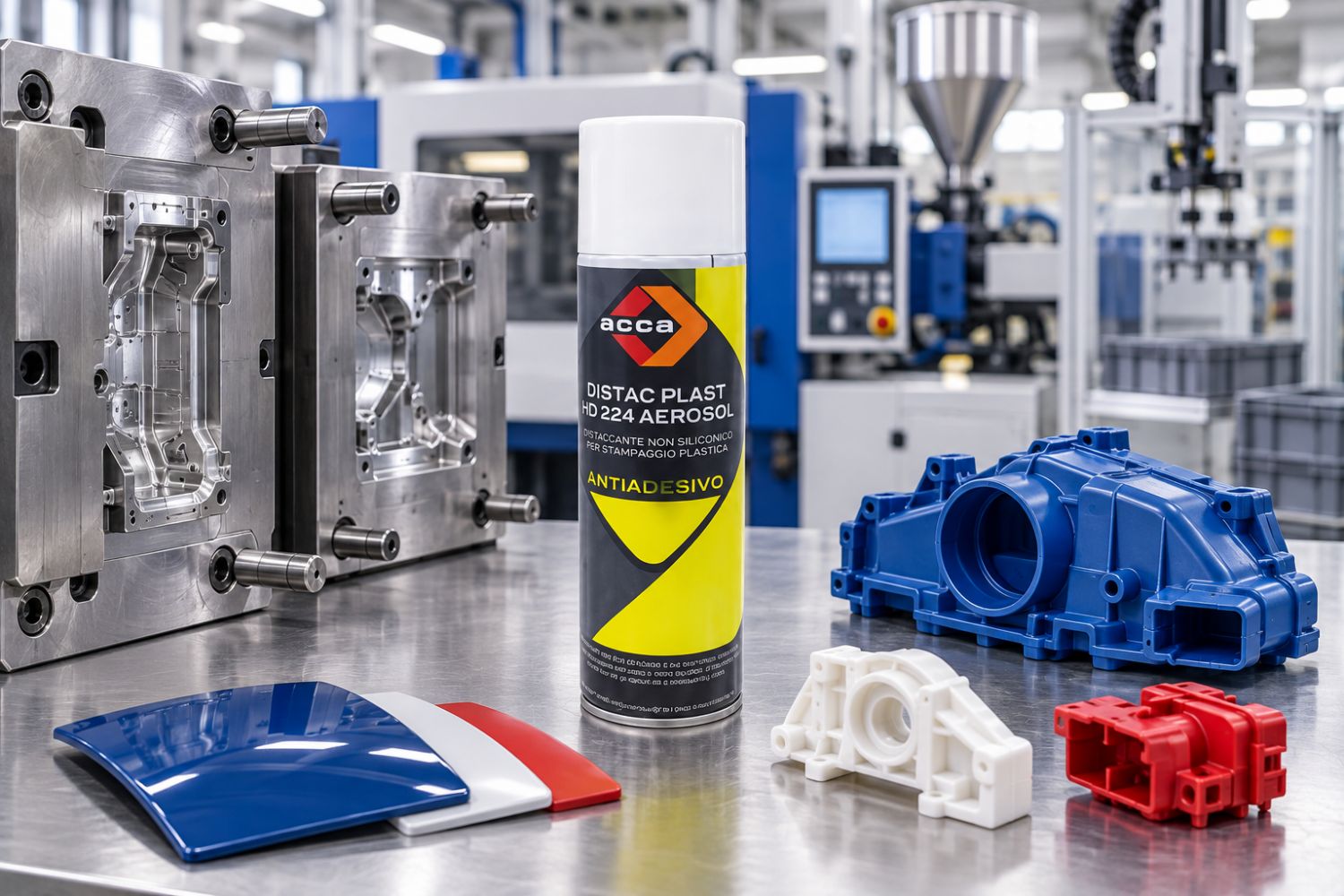
The ACCA DISTAC PLAST HD 224 range is available in liquid and ready-to-use aerosol forms. Its special formulation, free from conventional silicone oils, provides an important advantage for suitable applications where molded components subsequently need to be painted, bonded or screen printed.
Principal benefits
* Facilitates easier removal of thermoplastic components from molds.
* Reduces adhesion and friction between the mold and component.
* Helps reduce the risk of component deformation and surface damage.
* Supports the demolding of plastic parts with complex geometries.
* Creates a thin and controlled release film on the mold surface.
* Contributes to reduced mold-cleaning requirements and production interruptions.
* Helps maintain consistent component surfaces and reliable production.
* Offers liquid and aerosol alternatives for different production conditions.
* May support subsequent painting, bonding and printing under suitable conditions.
* Provides alternatives for manual and automated application systems.
Application areas
ACCA plastic mold release agents can be used in applications including:
* Thermoplastic injection molding
* Technical plastic components
* Automotive plastic parts
* Electrical and electronic housings
* Plastic components for household appliances
* Thin-wall plastic products
* Deep-ribbed and complex components
* Plastic components with large surface areas
* Plastic parts requiring subsequent painting
* Components requiring adhesive bonding
* Components requiring screen or pad printing
* Technical products requiring controlled surface quality during assembly
Product suitability should be evaluated according to the polymer, mold temperature, component geometry and subsequent surface-processing requirements.
Featured products
DISTAC PLAST HD 224 Liquid
A liquid mold release agent developed for thermoplastic molding. It forms a controlled release film on the mold surface and helps facilitate the removal of plastic components.
The liquid form can be used for manual application or with suitable spraying and automatic dosing equipment. It is particularly suitable for processes requiring control over application quantity and frequency during series production.
The application quantity should be determined according to the plastic material, mold temperature, surface geometry and demolding difficulty. Controlled application is essential because excessive use may cause surface residues or affect subsequent processing performance.
DISTAC PLAST HD 224 Aerosol - 500 ml
The ready-to-use aerosol version of DISTAC PLAST HD 224. It provides a practical solution for localized application, production trials, mold changes, low- and medium-volume manufacturing and processes requiring rapid intervention.
The aerosol format facilitates thin and uniform application to the mold surface. It supports the demolding of thermoplastic components and helps maintain component surface quality when used in the correct quantity.
Its formulation, free from conventional silicone oils, may allow components to be subsequently painted, adhesively bonded, screen printed or subjected to similar surface-processing operations under suitable conditions.
Advantages for subsequent surface processing
Some conventional mold release agents may leave residues that interfere with the adhesion of paint, adhesives or printing inks to plastic surfaces. This can create additional cleaning requirements, surface-preparation operations or quality problems.
DISTAC PLAST HD 224 has been developed with subsequent surface processing in mind. However, final performance does not depend solely on the release agent. The plastic material, paint or adhesive system, applied product quantity, mold temperature and surface cleanliness also influence the result.
The following checks are therefore recommended on actual components before series production:
* Paint-adhesion testing
* Adhesive-bond strength testing
* Screen or pad-printing tests
* Surface-energy verification
* Visual surface-quality inspection
* Ageing tests where required
Selecting the correct product and application quantity
The following criteria should be evaluated when selecting and applying a plastic mold release agent:
* Type of thermoplastic material
* Fillers and additives contained in the material
* Mold temperature
* Component geometry and wall thickness
* Glossy or textured component surfaces
* Ejection system
* Production cycle time
* Required application frequency
* Subsequent component-processing operations
* Manual or automated application requirements
The mold release agent should be applied at the lowest quantity that provides effective release performance. This helps achieve reliable demolding while preventing unnecessary accumulation on the component or mold surface.
Polmak Plastik supports customers in evaluating process conditions, selecting the appropriate ACCA plastic mold release agent, determining the application method and planning production trials.