Product Descriptions
Laser Glass Drilling Technology
4JET laser glass drilling solutions are advanced laser-based manufacturing technologies developed for highly precise, contact-free, and fully controlled hole drilling on glass surfaces. Cracking, edge chipping, microstructural damage, and high scrap rates frequently encountered with conventional mechanical drilling methods are completely eliminated with laser glass drilling technology.
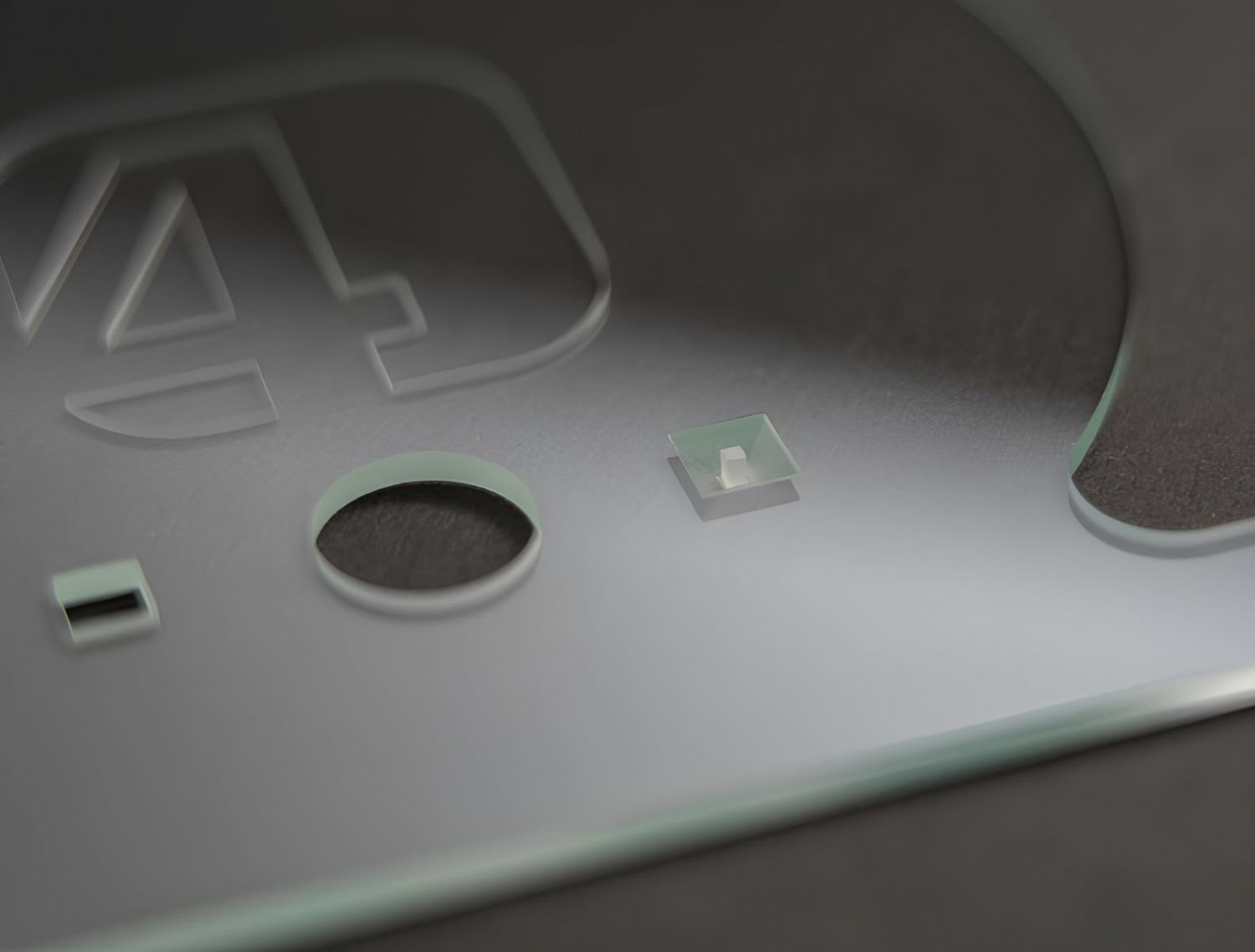
This technology has become an industrial standard in applications that require high quality and repeatability, such as photovoltaic glass, automotive glass components, architectural and functional glass panels, electronic glass, and optical glass. Laser glass drilling produces clean, smooth, and mechanically robust holes without the need for additional surface finishing or post-process edge treatment.
Working Principle and Technical Structure
Contact-Free Laser Drilling Approach
In the laser glass drilling process, high-energy laser radiation is focused onto the glass surface for extremely short durations with high intensity. This localized energy creates a controlled micro-separation in the targeted drilling area. The hole is formed without applying mechanical force and without damaging the surrounding glass structure. Thanks to this contact-free process, internal stresses are avoided and structural integrity is preserved.
Dry and Chemical-Free Process
Laser glass drilling is a completely dry process. No cooling fluids, solvents, or chemical additives are used. This reduces environmental impact and eliminates the need for post-process cleaning and waste management. At the same time, process times are shortened and operational efficiency in production lines is significantly improved.
Precise Optical Control and Geometric Flexibility
Laser systems allow hole diameter, depth, position, and geometry to be precisely defined via software. Circular, oval, special-shaped, or micro-holes can be produced directly from CAD-based data. This flexibility enables the creation of multiple holes with different sizes and positions on a single glass component with high dimensional accuracy.
Technical Advantages and Performance Characteristics
Crack-Free and Burr-Free Hole Structure
Since laser glass drilling involves no mechanical contact, cracks, burrs, or micro-fractures do not occur at hole edges. This significantly improves the mechanical strength of drilled glass components and delivers superior performance, especially in assembly, bonding, and sealing applications.
Wide Glass Thickness and Glass Type Compatibility
Laser glass drilling systems can operate across a broad range of glass thicknesses, from thin glass to thick structural glass. Stable and repeatable drilling performance is achieved on float glass, semi-tempered glass, and functional glass types.
High Process Repeatability
Because all drilling parameters are software-controlled, identical quality is achieved in every production cycle. This is a critical advantage for quality standardization and traceability in high-volume production environments.
Application Areas
Photovoltaic Glass and Solar Energy Applications
Cable passages, connection points, and mounting holes in PV module glass are drilled with high precision using laser glass drilling. This preserves edge strength and extends module service life.
Automotive Glass
In the automotive industry, laser drilling provides reliable and deformation-free solutions for glass components requiring holes for sensors, cameras, radar systems, and mounting elements.
Architectural and Functional Glass
Mounting, suspension, and connection holes in large architectural glass panels can be produced quickly, cleanly, and with high accuracy using laser technology. This delivers both aesthetic and structural benefits.
Electronic and Optical Glass Applications
Micro-hole drilling in smart device displays, optical glass, and sensitive electronic components can be performed without breakage risk using laser glass drilling technology.
Industrial and Operational Benefits
Low Scrap Rate and Material Savings
Laser glass drilling processes only the targeted area, minimizing material loss. Breakage and rework requirements are significantly reduced.
Automation and Line Integration
Laser glass drilling systems are designed for integration with robotic handling, automated loading and unloading, and production lines. This supports Industry 4.0-compatible manufacturing environments.
Shorter Cycle Times
The elimination of masking, mechanical tool changes, and secondary finishing operations significantly reduces total production time.
Conclusion: A New Standard in Glass Manufacturing with Laser Glass Drilling
4JET laser glass drilling technology offers a contact-free, high-precision, and environmentally friendly manufacturing approach for glass processing. With superior edge quality, crack-free hole structures, automation compatibility, and repeatable quality, laser glass drilling has become an essential part of modern industrial production.
From photovoltaic glass to automotive and architectural applications, and from electronic displays to precision optical glass, laser glass drilling advances production safety and quality standards to a higher level across a wide range of industries.