Product Descriptions
Laser Glass Cutting Technology
4JET's laser glass cutting solutions are advanced laser-based surface processing technologies that enable highly precise, contact-free and extremely controlled cutting of glass components in industrial manufacturing processes. Going far beyond conventional mechanical breaking or cutting methods, this technology delivers excellent edge quality, high production efficiency and repeatability, especially in applications such as electronic displays, automotive glass, smart windows and high-precision medical or optical glass.
The physical brittleness of glass and the challenges involved in its processing often lead to high costs, waste and quality issues when traditional methods are used in high-tolerance production. 4JET laser glass cutting technology has been developed to eliminate these limitations by using laser filament cutting and focused laser processing principles, offering outstanding edge strength and micrometer-level precision even at high production speeds.
Working Principle and Technical Structure
Laser Filament Cutting Technology
4JET's PEARL series laser glass cutting systems use a laser beam to create a filament inside the glass, enabling controlled separation of the material from bottom to top. This approach prevents cracking or edge chipping during cutting and produces clean, high-quality edges.
3D Free-Form Cuts and Notch Geometries
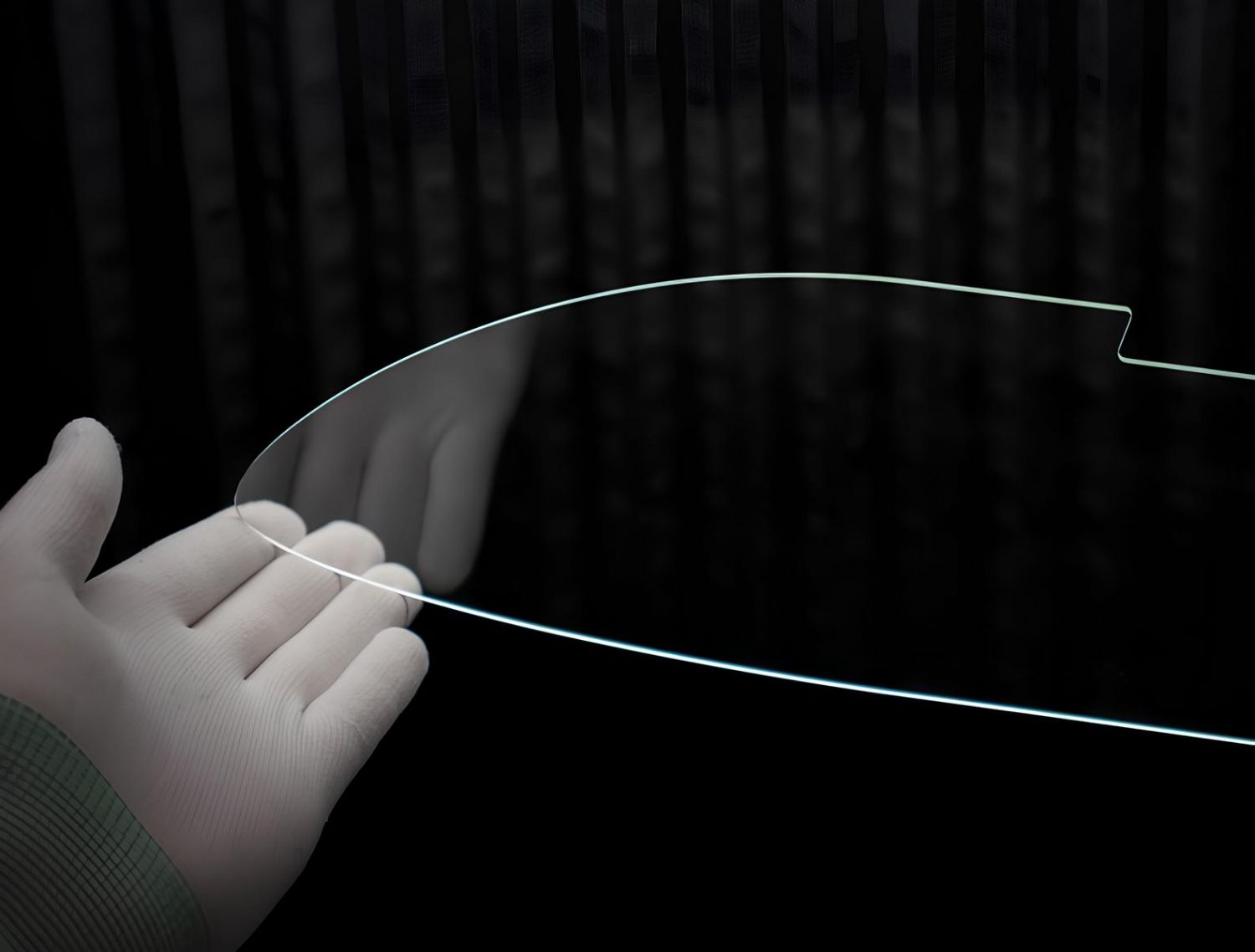
In the laser process, CAD-based contour data can be transferred directly to the system, allowing the production of complex geometries such as free-form shapes, curves and notches. This increases manufacturing flexibility and provides greater design freedom for applications such as architectural glass and OLED or smartphone displays.
Ultra-Thin Glass and Glass Stacks
The systems can operate across a wide range of glass thicknesses, from ultra-thin glass below 100 µm up to glass thicknesses of 8 mm. This versatility is particularly important for electronic, optical and specialty glass markets.
Full Automation and Line Integration
PEARL platforms are designed to be combined with automatic loading and unloading, pick-and-place modules, scrap glass removal and automated metrology units. This reduces manual data handling, shortens cycle times and minimizes human error, creating a process suitable for industrial mass production.
Technical Advantages and Process Features
High Cutting Speed and Production Efficiency
PEARL laser glass cutting systems can reach cutting speeds of around 1 m/s and process multiple glass stacks simultaneously, providing a significant speed advantage in high-volume production lines.
Micrometer-Level Dimensional Accuracy
The laser systems can achieve cutting tolerances as low as ±5 µm, significantly improving quality in precision applications such as display glass, optical components and microelectronic glass parts.
Excellent Edge Strength and Surface Quality
Thanks to the glass filament cutting method, edge strength can be up to twice as high as with mechanical cutting methods, with no burrs or edge cracks after processing.
Wide Workpiece Size Compatibility
The PEARL series can be scaled from standard formats such as 1.5 × 0.85 m² up to 1.5 × 3.0 m² and even larger glass sheets, offering high flexibility for architectural and large-format production glass panels.
Application Areas
Electronic Displays and Optical Glass Manufacturing
Laser glass cutting is an ideal solution for high-precision components such as smartphone screens, tablet cover glass and camera protection glass.
Automotive Glass Components
Automotive applications such as cockpit displays, panoramic roofs and sensor glass can be produced with clean, smooth and highly durable edges using laser cutting.
Smart Window and Architectural Applications
Large glass panels, curved surfaces and functional glass components can be processed efficiently and with high quality using laser cutting technology.
Medical, Micro-Optical and Microelectronic Glass
Laser filament technology enables the crack-free processing of thin and micro-scale glass components, offering major advantages for medical technologies and precision devices.
Operational and Industrial Advantages
Low Waste and High Production Efficiency
Material loss during laser cutting is minimal and no secondary finishing operations are required, increasing overall production efficiency and material savings.
Flexible Process Control and CAD Integration
CAD data can be processed directly, enabling rapid adaptation to changing design requirements and the production of complex cutting patterns.
Automation and Industry 4.0 Compatibility
Thanks to its high integration capability, laser glass cutting processes can be easily incorporated into existing automated production lines, supporting traceable and standardized manufacturing.
Conclusion: New Horizons in Manufacturing with Laser Glass Cutting
4JET laser glass cutting solutions redefine glass manufacturing by meeting key industrial requirements such as high precision, superior edge quality, flexibility and automation compatibility. With filament cutting technology and support for a wide range of applications, they offer a powerful solution for industries ranging from automotive and electronic displays to medical and architectural glass production.