Product Descriptions
AOKI Injection Stretch Blow Molding Systems
A Rational Investment and Efficient Production Approach
When designing injection stretch blow molding (ISBM) machines, AOKI adopts a holistic engineering approach that focuses not only on machine performance, but also on investors' long-term business objectives, total cost of ownership, and sustainable production requirements. This philosophy clearly demonstrates AOKI's core design principle: selecting the right technology determines not only today's production efficiency, but also tomorrow's competitive strength.
According to AOKI, the first question to ask when selecting a production system is not the machine price, but how much added value it delivers to the business. Machines that appear to have a low initial investment cost but feature complex structures can significantly increase total cost in the long term due to higher maintenance expenses, downtime, and energy consumption. For this reason, AOKI favors systems with simple mechanisms, a limited number of moving parts, and stable operation. A simpler mechanical structure means lower failure risk, faster service intervention, and reduced maintenance costs.
The time required to reach production targets is a critical parameter that directly affects return on investment. Thanks to high cycle speeds and optimized process steps, AOKI systems enable users to achieve their production goals in a shorter time frame. Producing more units per cycle within the same production area significantly reduces fixed costs per unit.
From an operating cost perspective, the size and organization of the production facility are also important factors. AOKI's compact and integrated machine design allows high-capacity production even in smaller manufacturing spaces. Reduced requirements for warehouse and production areas help lower rental, heating, cooling, and logistics costs, thereby optimizing overall operating expenses.
One of the most significant factors determining production costs is energy consumption. AOKI treats low energy consumption not merely as an advantage, but as a fundamental design criterion. Systems that consume less energy reduce direct electricity costs while also contributing significantly to environmental sustainability. Energy-efficient machines provide substantial annual cost savings, especially in high-volume production facilities.
Cooling processes represent a major component of energy consumption in blow molding production. By optimizing process temperatures, AOKI systems enable cooling at lower temperature levels. This reduces the amount of energy required for cooling while simultaneously shortening cycle times. Shorter cooling times result in higher production speed and lower overall energy consumption.
Maintenance costs are often overlooked during investment decisions, yet they have a major long-term impact. The limited number of moving parts in AOKI machines minimizes maintenance requirements. Fewer moving components mean less wear, longer component life, and lower spare parts costs. As a result, machine availability increases and unplanned downtime is minimized.
Energy savings are not limited to the production process alone. In the AOKI approach, logistics and internal material handling processes are also evaluated from an energy-efficiency perspective. Reducing unnecessary transport steps within the production facility saves both time and energy. Minimizing product handling contributes directly to a leaner and more efficient production process.
Product diversity and flexibility represent a critical competitive advantage for modern packaging manufacturers. AOKI machines are capable of processing a wide range of plastic materials, enabling production beyond PET alone. This flexibility allows manufacturers to respond quickly to changing market demands. A machine capable of producing a broader product range accelerates return on investment.
Labor costs are another key element of AOKI's design philosophy. Highly automated machines that require fewer operators reduce personnel costs while standardizing production quality. Minimizing human-dependent errors ensures consistent product quality and lowers scrap rates.
Environmental impact plays a central role in AOKI's decision-making processes. Low energy consumption, fewer process steps, and reduced scrap rates contribute to a more environmentally friendly production model. AOKI aims to reduce the negative environmental impact caused by systems with high energy consumption and high waste generation. This approach offers significant advantages in terms of environmental responsibility and long-term regulatory compliance.
Production losses directly affect overall profitability. By reducing the number of process steps, AOKI systems minimize errors and losses during production. Fewer processes mean fewer potential failure points and higher production stability, delivering a significant economic advantage, particularly in high-volume manufacturing operations.
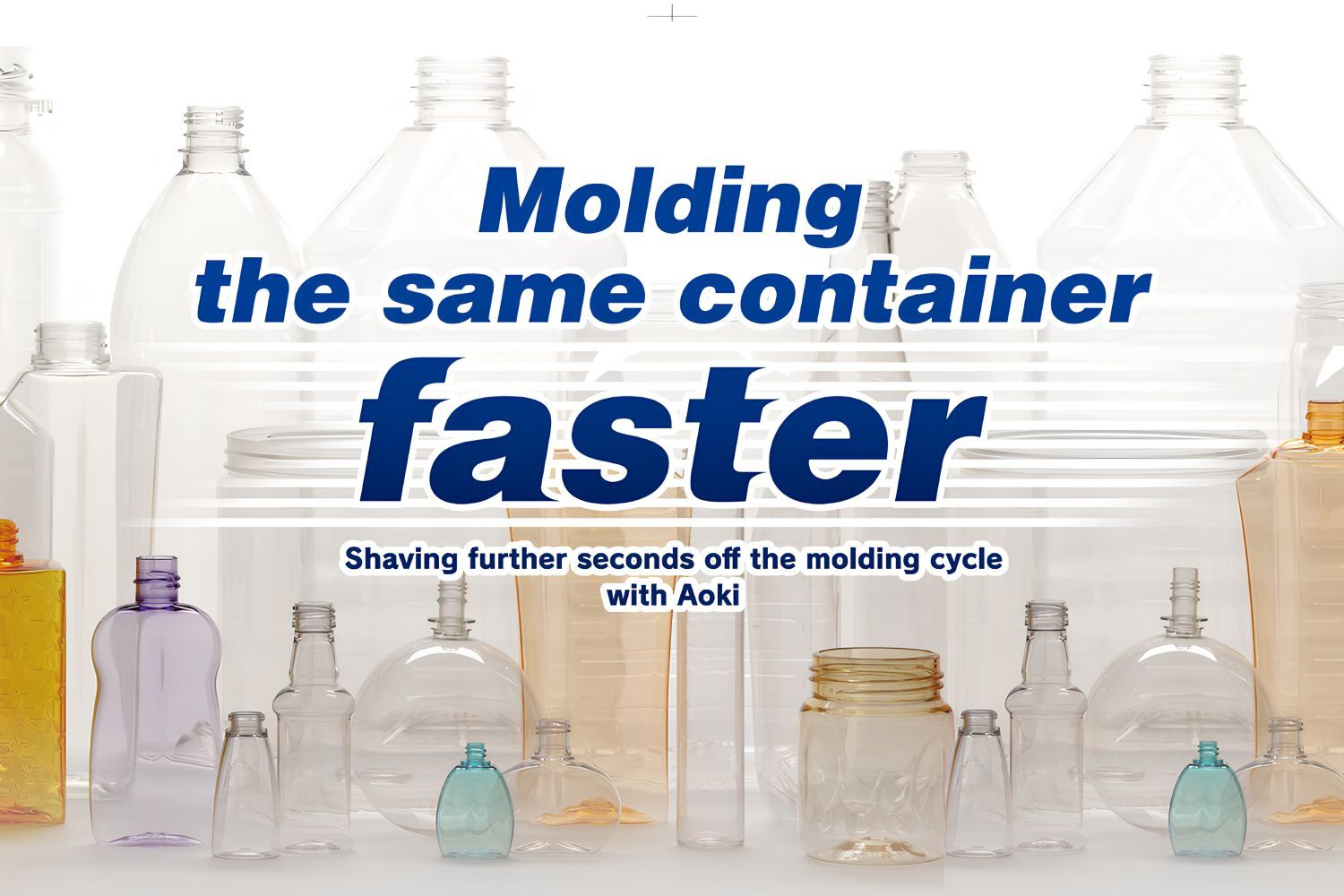
Cycle time is one of the most tangible indicators of production efficiency. Shorter cycle times allow more products to be manufactured on the same machine. AOKI evaluates short cycle times not only as a speed advantage, but in conjunction with energy efficiency and product quality. Systems with longer cycle times increase energy consumption and limit production capacity.
AOKI's partnership philosophy is a natural extension of this engineering approach. The company prefers to collaborate with partners who prioritize long-term value creation rather than short-term gains. This mindset reflects AOKI's commitment to providing not just machinery, but a sustainable production model to its customers.
In conclusion, AOKI injection stretch blow molding systems offer investors a reliable long-term solution through low energy consumption, simple mechanical design, high production speed, minimal maintenance requirements, and an environmentally responsible approach. By selecting the right technology, production facilities can achieve higher added value at lower costs and secure a lasting competitive advantage.