Product Descriptions
Alternating Injection Moulding with Rotary Table | Multi-Material Injection Technology
High Efficiency and Process Stability in Multi-Component Production
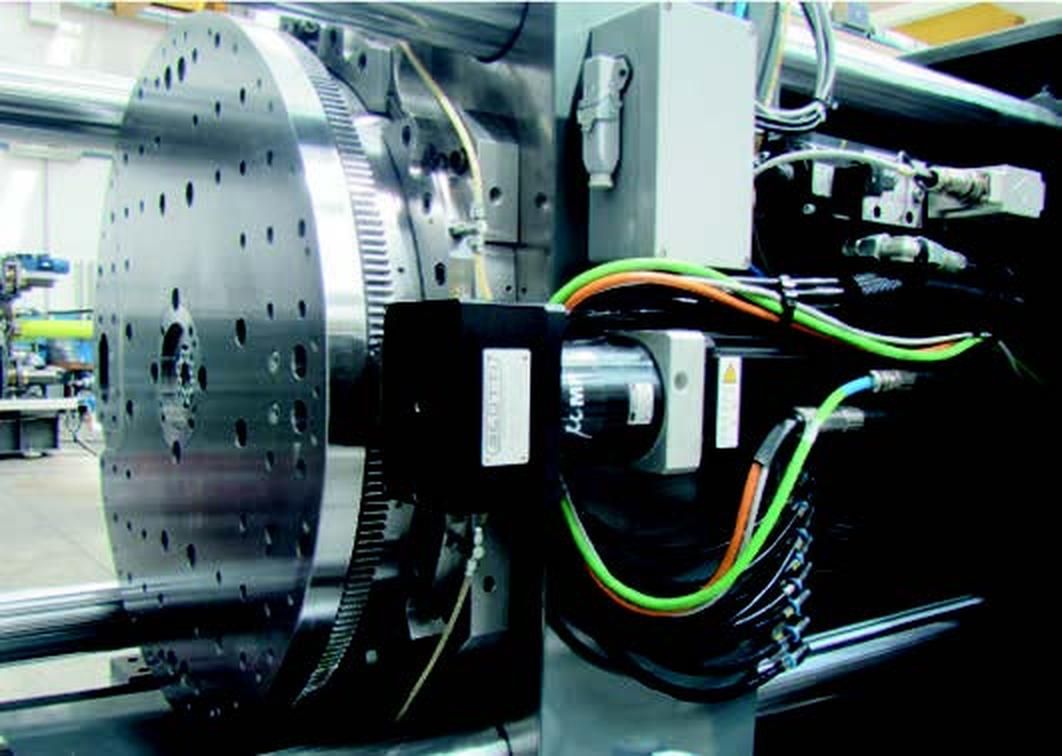
Alternating Injection Moulding with Rotary Table is an advanced manufacturing technology that enables two or more different polymers to be injected sequentially and in a controlled manner within the same mould. With rotary table integration, injection sequencing, mould positioning and material transitions are managed with high precision, enabling the production of multi-layer or multi-material parts within a single cycle.
This technology provides maximum productivity, lower operational cost and sustainable production advantages in high-volume manufacturing environments such as automotive, packaging, technical plastics and consumer products.
Working Principle - Rotary Table Supported Alternating Injection
In rotary table systems, the mould rotates between injection stations at defined indexing intervals. This allows multiple materials to be delivered into the mould in a controlled sequence.
Typical process flow:
• Material A - outer layer formation
• Rotary table rotation - mould position change
• Material B - core or functional layer
• Material A re-injection - surface stabilization
Rotary architectures enable:
• A-B-A or A-B-A-B flow strategies
• multi-layer part structures
• bi-material and multi-material production
• synchronized injection control
Measured Production Advantages
Alternating injection combined with rotary table technology delivers directly measurable performance benefits:
• 30-50% reduction in assembly operations
• 20-40% shorter production cycles
• 40-70% material optimization potential
• 20-50% reduction in virgin material consumption
• 15-30% cost improvement per part
• 10-20% scrap rate reduction
• 25-55% energy savings in servo-hybrid systems
In high-volume production lines, these values translate into significant total manufacturing cost advantages.
Machine Platform and Technical Capacity
Rotary table alternating injection systems operate across wide performance ranges:
• Clamping force: approx. 80 - 3200 tons
• Shot volume: hundreds of cm³ up to 20,000+ cm³
• Plasticizing capacity: tens to hundreds of kg/hour
• Rotary table indexing time: typically 1 - 4 seconds
• 2 or 3 injection unit configurations
• Sequential and co-flow injection architectures
This flexibility supports both small precision components and large structural plastic parts.
Process Advantages of Rotary Table Integration
Rotary table systems enhance process stability and productivity:
• precise mould positioning
• controlled injection sequencing
• simultaneous production flow
• stable cycle performance
• increased production speed
This architecture is particularly effective for:
• multi-cavity moulds
• high-tonnage machines
• complex multi-component parts
Product Performance and Engineering Benefits
Alternating injection with rotary table enables the combination of different material properties in a single part:
• high rigidity with lightweight core structures
• consistent surface quality
• improved impact resistance
• functional layered architecture
• design flexibility
Mechanical performance improvements are especially significant in thick-wall and structural components.
Energy Efficiency and Production Continuity
• servo-controlled motion systems
• reduced hydraulic load
• lower heat generation
• optimized energy consumption
• 24/7 production readiness
Hybrid platforms can achieve 30-60% lower energy consumption compared to conventional hydraulic systems.
Automation and Industry 4.0 Integration
Rotary table alternating injection platforms are designed for smart production environments:
• robot-assisted part handling
• automated transfer systems
• process data monitoring
• quality tracking and analytics
• remote service infrastructure
• smart factory connectivity
These features support the development of high-capacity automated molding cells.
Application Areas
• automotive interior and exterior components
• multi-layer packaging products
• home appliance components
• technical structural plastics
• consumer goods
• sustainable multi-material products
Key Advantages of Alternating Injection with Rotary Table
• multi-material production in a single cycle
• up to 70% core material optimization
• 30-60% energy savings
• 20-40% faster production cycles
• high repeatability and process stability
• elimination of secondary assembly
• automation-ready architecture
• sustainable and cost-optimized manufacturing
Strategic Value in Industrial Production
Alternating Injection Moulding with Rotary Table is not just a process but a strategic manufacturing technology balancing cost, performance and sustainability. With layered material architecture, manufacturers achieve:
• lower production cost
• higher product performance
• reduced material consumption
• faster manufacturing
• stronger competitive positioning
In modern plastics manufacturing, rotary table supported alternating injection is positioned as a critical solution for multi-material design, high-volume production and sustainable manufacturing strategies.