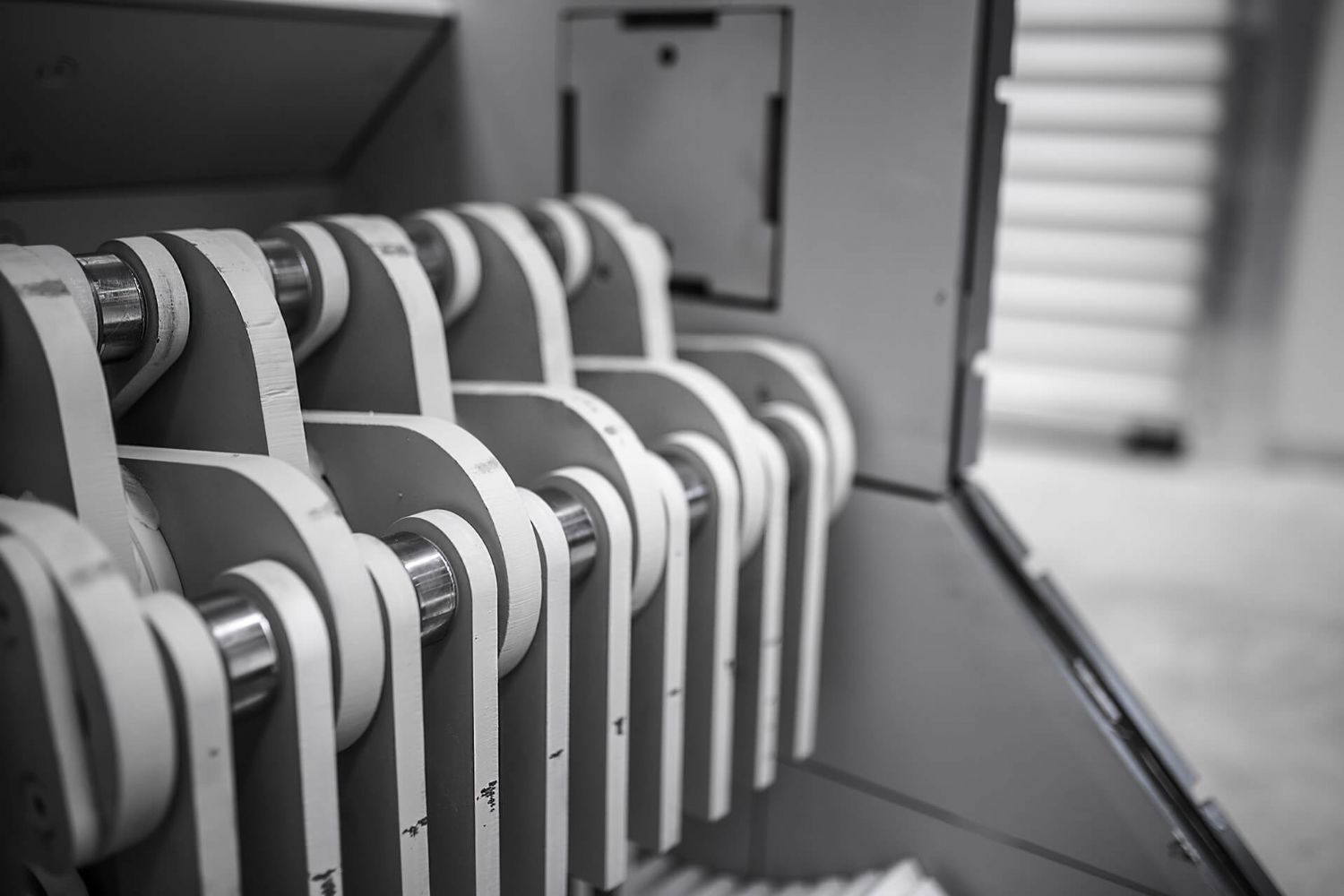
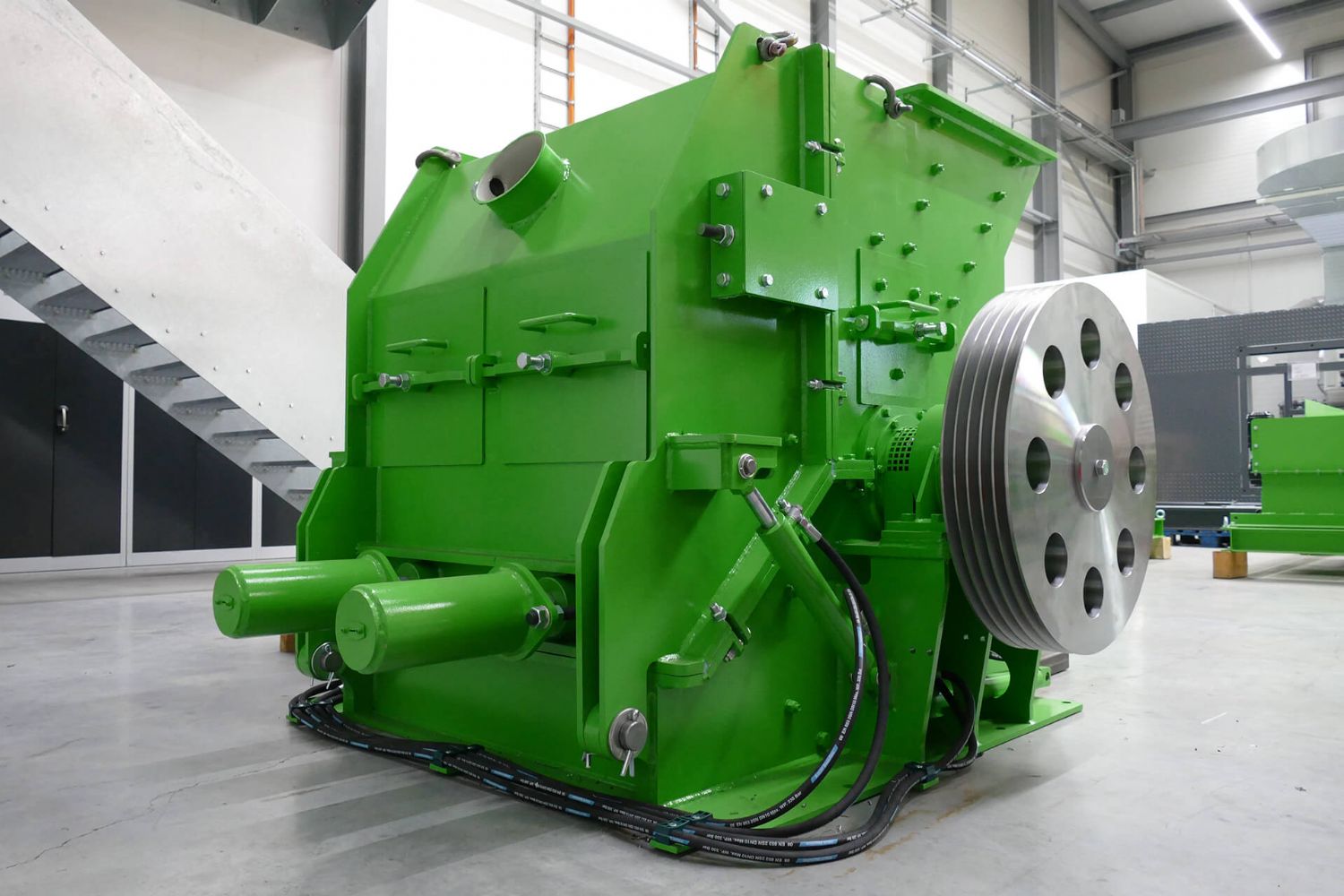
Hammer mill is a machine used to shred or crush materials into smaller pieces. It consists of a rotor containing a series of hammers that spin within a chamber. The materials to be processed are fed into the mill through a feed chute, and they encounter the rotating hammers which impact and break them into smaller particles. The size of the final product depends on the size of the perforations in the screen covering the mill's discharge opening.
Hammer mills are widely used in various industries for processing a variety of materials, including grains, biomass, wood, and minerals. They are commonly used in the agricultural and food processing industries for grinding grains and producing feed, as well as in the manufacturing of ethanol and other biofuels. Additionally, hammer mills are used in the pharmaceutical, chemical, and mining industries for size reduction of various materials.
The design and capabilities of hammer mills can vary based on the specific application and the type of material being processed. They are valued for their versatility and efficiency in reducing the size of diverse materials through the impact of rapidly moving hammers.
Hammer Mills
The champions for hard-brittle materials.
Hammer mills are particularly suitable for metal scrap, electrical and electronic scrap or swarf made of steel, aluminium, but also other materials. And due to the easy adjustability during operation, also the baling of non-ferrous metals is no problem. The resultant size is variable and can be changed during operation. This product feature in particular is the best example of its high practicability in use.
The distinguishing features of the HA600 and HA800 hammer mills are
► Easy maintenance
Due to two quick-opening housing accesses.
Through easily replaceable grinding tools on the beater rotor.
► Savings on operating costs
Due to long service life of the reversible grinding tools.
Due to highly wear-resistant mill rotor.
► Controllable throughput of the particle size
Through individual adjustment of the grinding gap opening and easy change of grinding tools.
Through adjustable rotor speeds.
► Processing of moist materials possible
No ingress of mill material or dust into the bearings due to external shaft bearing and special housing sealing.
► Low noise and dust generation
Due to optional noise-insulating housing.
Special shaft and housing sealing and corresponding extraction point.
► Efficient and safe operation
PLC control with overload protection to protect the machine from damage in case of overload or from solid parts.
Advantages of the hammer mill
Using conventional technology, many materials are very difficult to break down or subject the equipment to heavy wear. The use of a variety of tools allows us to process a very wide spectrum of a wide range of materials. A range of various sieve containers and grinding bars is used to determine the size of the output fractions as well as forming the composite materials into bales. Different rotor speeds can be adopted to fit the material being processed. The well-engineered welded construction and the divisible machine housing enable quick and easy access to the tools. Due to the additionally integrated hydraulic system, the housing can be opened with minimal effort. The installation of different baffle plates allows us to define precisely the grain size of the materials being processed. Thanks to the automatic overload protection device, we achieve a high level of safety in respect of foreign matter contained in the material, so that the baffle plate can move aside automatically in the case of excessive load.
Wide range of application and highest variability
The flexible design of the shock and impact principle, adapted to the different materials being processed, can be constructed both for the breaking-up of materials and as baling machines, thereby offering a wide-ranging scope of applications.
Refrigerator recycling as well as electrical and electronic scrap processing as a pre- or post-stage after standard shredding technology.
Processing of aluminium profiles and composite materials
Preparation of shredder light fraction for subsequent separation
Recycling of printed circuit boards, IC components and small electronic equipment
Grinding of non-ferrous composite materials with subsequent baling
Processing of large-volume metal swarf
Preparation of tyre wires for subsequent separation of rubber and iron
Slag processing and much more
Top technology for selective processing of hard-brittle materials
► Integrated explosion protection
Highest safety standards.
► Openings for grinding plate maintenance
Direct access for fast maintenance.
► Automatic positioning of the grinding track
Protection against overload through stable spring assemblies.
Emergency ejection system for massive parts and extraneous materials.
► Hydraulic housing opening
For easy accessibility during maintenance and inspection work.
► Housing designed to be dust- and gas-tight
Special shaft and housing sealing.
Allows inerting with nitrogen or other gases.
► Controllable throughput of the particle size
Individual adjustment of grinding gap opening and easy change of grinding tools.
Adjustable rotor speed
► External shaft bearing
For protecting the bearings from contamination.
► Hydraulically extendable sieve basket for easy accessibility.
HA600 - Technical Data
► Number of rotors 1
► Drive power 11 kW to 45 kW
► Rotor diameter 150 mm
► Weight 1.500 kg to 1.650 kg
► Sieve grate opening 4 mm to 65 mm
HA800 - Technical Data
► Number of rotors 1
► Drive power 45 kW to 132 kW
► Rotor diameter 610 mm
► Weight 9.000 kg to 13.000 kg
► Sieve grate opening 8 mm to 100 mm