Product Descriptions
Devolatilization Solutions
Advanced Devolatilization Systems for Polymer and Recycled Resin Purification
Our Devolatilization Solutions deliver robust processing systems engineered to efficiently remove volatile compounds, monomers, short chains, moisture, and other impurities from polymers and recycled resins. Designed for modern manufacturing and recycling environments, these devolatilization systems enhance material quality, stability, and performance, while improving process control and cost efficiency. Whether applied to virgin polymers, recycled materials, or specialty compounds, devolatilization plays a critical role in producing high-performance plastics and pellets with superior end-use properties.
Eliminating volatiles during polymer processing not only improves extrusion and molding performance but also helps reduce odors, degradation, and potential defects in the final products. These systems incorporate advanced screw designs, precise vacuum application, and efficient heat transfer to ensure optimized devolatilization under continuous industrial operation.
What is Devolatilization?
Devolatilization is a thermal processing step used to strip volatile constituents-including residual monomers, solvent traces, moisture, low-molecular-weight oligomers, and gases-from polymers and resin melts. By applying controlled heat, vacuum, and shear, the devolatilization process drives off these unwanted components, resulting in cleaner, higher-quality polymer melts that lead to stronger mechanical properties, improved surface appearance, and enhanced processability.
Key Features of Devolatilization Systems
High-Performance Twin-Screw Design
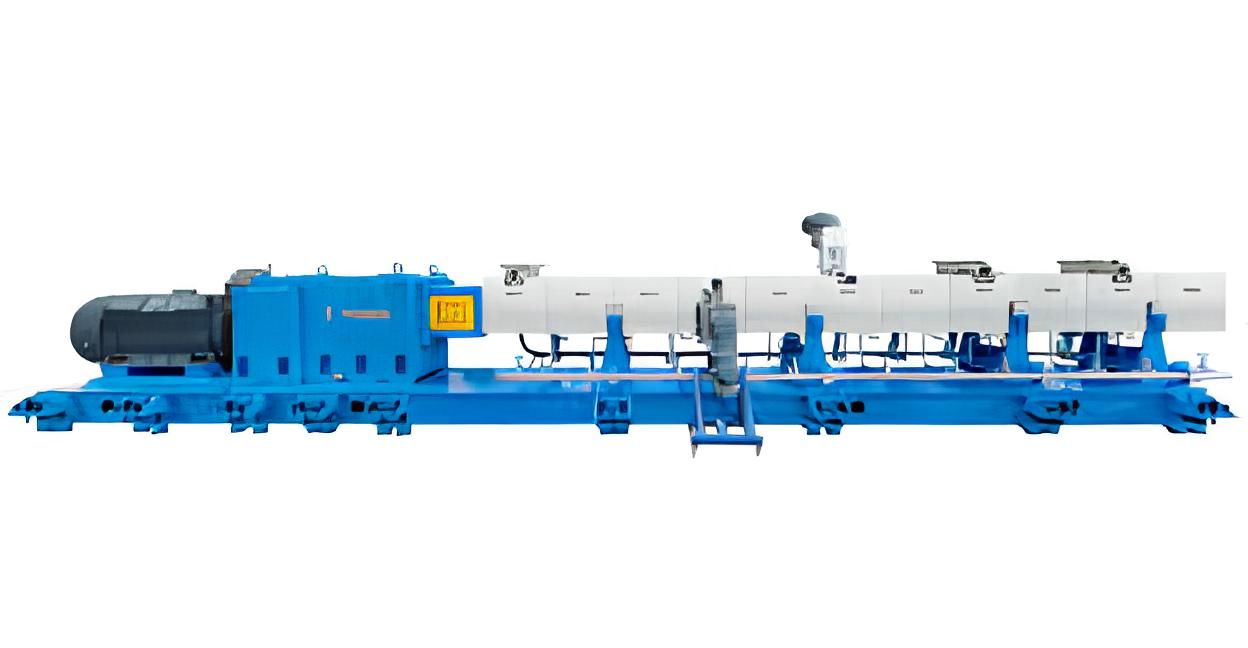
The heart of the devolatilization line is a high-efficiency twin-screw extruder tailored for optimal devolatilization performance. Its intermeshing screw configuration continuously exposes the melt to vacuum and shear, enabling effective removal of volatile substances.
Optimized Vacuum Application
Precise vacuum zones along the screw barrel enhance volatile extraction while maintaining stable melt pressure and temperature control. Multiple devolatilization zones allow staged removal of volatiles for improved polymer purity.
Advanced Heating and Cooling Control
Devolatilization systems integrate precise barrel heating and efficient cooling to maintain ideal melt conditions. This balance minimizes thermal degradation while maximizing volatile removal efficiency.
Flexible Feedstock Compatibility
Designed to work with virgin polymers, reprocessed resins, recycled flake or pellet streams, and specialty compounding outputs, these systems support versatile industrial processing requirements.
Typical Devolatilization Process
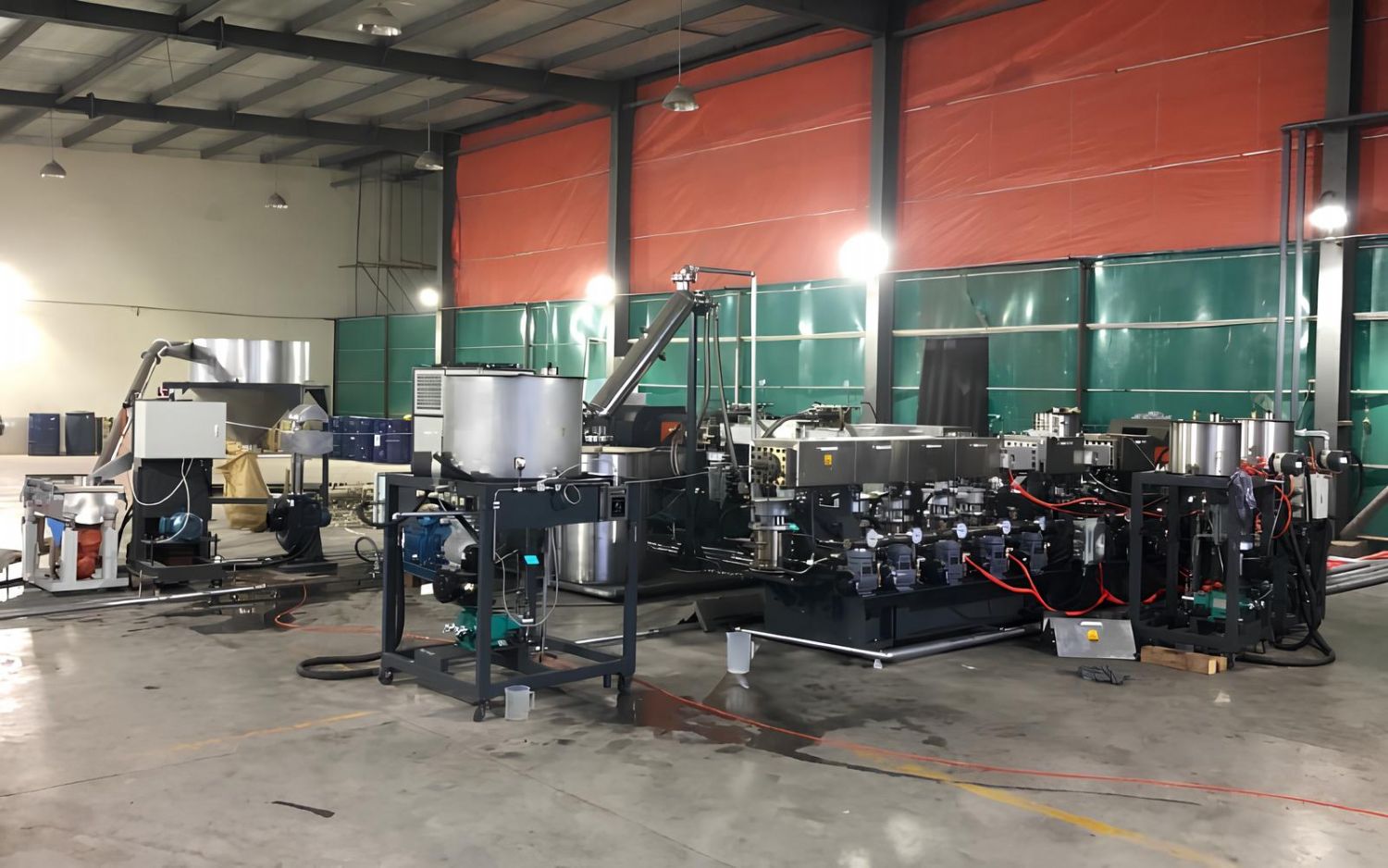
A complete devolatilization solution includes the following components:
• Twin-screw devolatilization extruder
• Vacuum pump and vacuum control systems
• Multi-zone heating and cooling barrel sections
• Melt filtration and pressure control modules
• Downstream pelletizing or sheet forming integration
• Automated monitoring and safety systems
This configuration ensures efficient volatile removal while maintaining continuous production flow in industrial settings.
Benefits of Devolatilization
• Reduces residual volatiles and moisture for higher purity melts
• Improves mechanical strength and surface quality of finished products
• Enhances process stability and extrusion performance
• Reduces odor and discoloration in recycled materials
• Increases consistency and reliability of compound outputs
• Supports downstream forming, molding, and pelletizing processes
Application Areas
Devolatilization systems are widely used across industries, including:
• Polymer compounding and masterbatch production
• Recycled resin purification and upcycling
• High-performance engineering plastics
• Extruded sheet and film manufacturing
• Automotive, appliance, and consumer goods parts production
• Specialty materials with strict VOC and impurity requirements
Why Choose Our Devolatilization Solution?
• Advanced twin-screw devolatilization technology
• Precise vacuum and thermal control systems
• Flexible configuration for diverse material streams
• Energy-efficient design with automated operation
• Scalable solutions for industrial applications